Showing posts with label Vermont. Show all posts

Wednesday, October 2, 2013

For Real Food Safety, Support Local Food and Local Oversight


For those who care about local foods and small farms, please submit comments to the FDA by November 15th on the new Food Safety Modernization Act (FSMA)Signed into law by President Obama in January of 2011, the FDA has taken more than two years to move FSMA through its rule-making procedure—a process still ongoing. The FDA hails FSMA as the most “sweeping reform of food safety laws in over 70 years.” An undeniably important objective given the attention-grabbing headlines announcing outbreaks of foodborne illness from hamburgers, chicken, fruits and vegetables, FSMA unfortunately undermines some of the safest producers of food in the nation—our local farmers.


The "sweeping" law risks sweeping the little guy right out of business. Designed to cover the disparate extremes of industrial farming and neighborhood farm stands, FSMA's one size fits all is a disaster in the making. The voluminous 548 page law is confusing. On the surface it appears that farms grossing less than $500,000 would be exempt from the law, but on closer examination, many farms would indeed have to comply with the expensive and cumbersome rules. How many? Neither the state agriculture department nor the FDA can answer that definitively, but based on USDA numbers and income criteria likely hundreds of Vermont farms will be affected.

At an FDA "listening session" held last month, farmers from Vermont and New Hampshire gave FDA representatives an almost universally unfavorable earful. Themes repeated throughout the morning were: the proposed law was overly cumbersome to struggling small farms; the majority of food borne illness outbreaks come from imported foods and large scale industrial food companies, not small, diversified farms in New England; criteria for the new law is not supposed to be in conflict with organic standards, but it is; and FSMA seems to duplicate laws that many farms already comply with like the USDA’s Good Agricultural Practices (GAP)program. Across the board, farmers felt the proposed law would put onerous requirements on them, consume their already tiny profit margins, hamper growth, and force many of them out of business. 

Over the course of the session, many farmers expressed their frustration at the inconsistencies and double standards in federal food safety policy. The FDA admits it is able to inspect only about 2% of imported food even though imported food has repeatedly been implicated in food borne illness outbreaks. While the government plans to impose increasingly cumbersome regulations on small produce farms, they are simultaneously relaxing and changing laws that will deleteriously affect food safety. Recently the USDA announced that it will allow U.S. grown chicken to be processed in China for resale in the United States, without any USDA inspectors on site. The processed chicken, used in canned soups, chicken nuggets and other products, will be sold
without any label informing the consumer it was processed in China.

Earlier in 2013, in an effort to save money for the government and the poultry industry, the USDAannounced plans to cut back the inspectors at slaughterhouse kill-lines by 75%, leaving only one inspector where there used to be four, while increasing the numbers of chickens killed to 175 per minute. USDA Secretary Vilsack believes that this will reduce thousands of foodborne illnesses, even though the Environmental Working Group’s report, Superbugs Invade American Supermarkets, exposes that antibiotic resistant bacteria is found in 81% of ground turkey; 69% of pork chops; 55% of ground beef; and 39% of chicken breasts, wings and thighs. No worries. Under thenew USDA rules, chicken carcasses will be doused in chlorinated water and “other antimicrobial substances” to deal with lingering fecal matter and other contaminants. 

The numbers of food borne illnesses used to justify FSMA are high. While quoted in the press as hard numbers they are, in fact, only estimates. These numbers were announced by the CDC a month before Obama signed FSMA into law and are almost 2000 times the rate of illness and 150 times the rate of death that were documented between 1998 and 2008. In Vermont, cases of food borne illnesses are low—about 250 statewide in 2012—although relative to population they hover around what the Vermont Department of Health cites as the national averages for reported cases in 2011 of 14.3 to 16.5 per 100,000. Over the past almost twenty years, the number of cases in Vermont have stayed relatively consistent. The Department’s most recent report on foodborne illness, dated May 2013, explains that Vermont’s cases are mostly “sporadic”—i.e. they are not connected.

While the Vermont Department of Health (DOH) agrees with the CDC that underreporting is a problem, State epidemiologist and foodborne illness expert, Erica Berl is quick to say that the DOH does not want every single person who is experiencing diarrhea or vomiting to report to the state. Berl says there are many reasons for these common symptoms of foodborne illness but, “most cases of GI illnesses are from viruses passed from human to human.”

When asked if she thought foodborne illness in Vermont could be traced to small local farms she replied, “Causation is very difficult to prove and often near impossible with the small numbers in Vermont. It is impossible to state that food borne illness does or does not ever come from small farms. What we know, capital K, is that there are certain high-risk foods linked to certain pathogens.” 

In short, there is no way to prove that any small farms in Vermont have caused any foodborne illness in the state. But, there is also no way to prove they haven’t.

While the state may not be able to say unequivocally that small farms are not the cause of foodborne illness, the farmers made it very clear at the FDA session that they do not believe they are to blame for outbreaks in the state. Repeatedly farmers said, “My family and I eat the food we are growing and selling. We would be the first to get sick if there were a problem.” Others commented that since they know their customers, they would be aware if someone got sick.

Some farmers expressed their fear that as small farms are forced out of business that foodborne illness will increase not decrease. The question begs, does trying to reduce the 200 some odd annual cases of foodborne illness which can not be definitively linked to Vermont’s small farms justify the enormous health and economic impact of FSMA throughout the state? If society’s goal is to keep reducing or trying to reduce the percentages of people who are sick then maybe the small farms of Vermont should be viewed as part of the healthy solution and goal, not as the culprits. It raises the need for an examination of health and what is considered relevant to food safety. Acute illness is dramatic and headline grabbing, but debilitating chronic illness is often far more damaging in the long run. Is diabetes a food safety issue? Are allergies a food safety issue? Chronic digestive diseases?

There is a reason Vermont has, per capita, the most farmer’s markets, certified organic farms, certified organic farm land, CSAs, local dollars spent on local foods, artisan cheese-makers, micro-breweries, and maple producers in the entire country. We love our local food producers, we care about our health and we are proud of Vermont’s agricultural heritage. 

Champion real food safety and security. Let FSMA fulfill its mandate by regulating those producing contaminated food, not those providing healthy food. Let the FDA know that you support Vermont local farms and local oversight. Tell the FDA that farms grossing less than $1 million should be regulated locally, by the Vermont Department of Agriculture, not the federal government. Keep Vermont’s farmers in business and keep our food healthy. Send your comments to the FDA by November 15th 2013.

Thursday, May 10, 2012

Pigs Prohibited? Sample Vermont Eats

Here is a sample listing from Vermont Eats—this is a sneak preview of a new listing that will be in the next update


Prohibition Pig is known for its large selection of beers (about 24 on tap and over 100 bottles including local and international varieties and three gluten-free) and pub-style fare. You can check out the daily listing of draft beers here. Fans missing the Hurricane Irene-damaged Alchemist Pub will be heartened to learn that the Alchemist's brews are served and most of its staff now work at the Pig.

The Pig loves sweet potatoes—you will find sweet potato fries, sweet potato muffins,  sweet potato bread pudding, sweet potato buns and sweet potato bbq sauce in addition to plenty of non-sweet potato choices from vegie, tempeh and meat burgers to salads, sandwiches, plates and desserts.

Locally made kim chi, root beer, cheeses, and tempeh as well as Vermont-grown fruit and vegetables are used to create the menu options. In addition to its local beers, The Pig's alcohol offerings include Vermont-made Barr Hill Gin, Whistle Pig Rye, and Dunc's Mill Rums.

Located on Waterbury's Main Street right where The Alchemist used to be: 23 South Main Street, Waterbury, VT 05676, 802-244-4120

Open 7 days a week. Monday to Thursday the bar is open 4 pm to 12 midnight & dining until 10 pm; Friday & Saturday the bar is open 3 pm to 1 am, dining from 4 pm to 11pm; Sunday the bar is open 3 pm to 12 midnight, dining 4 pm to 9 pm
$ Starters $4-10; Salads & Sandwiches $7-9; Plates $14-19

Sunday, May 6, 2012

Vermont Eats...Again

I am thrilled to announce the launch of the Vermont Eats app.... again. Due to some technical difficulties the app got off to a rough start last fall, but it is now available as an individual app on both the iTunes® store and the Android Market.

Vermont Eats is a tour de force of the great, green, groovy food scene in Vermont.

Vermont Eats has over 1500 photos and 470 entries, all searchable by price, region and type of business including farmer's markets, artisan cheeses, farm-to-table restaurants, micro-breweries, pizzas, gluten-free foods, vegetarian options, organic farms, health food stores and about thirty more categories
—all easy-to-find with built-in Google maps.

Vermont Eats is a must-have for both residents and travelersyou won't want to leave home without this App! Eat well and enjoy!

Monday, December 26, 2011

Android Vermont Eats App is Here

Android users rejoice! The Vermont Eats app is now available in Android format—and as an individual app (yay!) not within "Sutro World" like on the iTunes store.

So it is easy to get your copy of Vermont Eats and start enjoying the over 400 sources of great local food and places to eat.

Apple® device users—an updated Vermont Eats will be available soon—stay tuned.

Tuesday, October 18, 2011

Celebrate Food Day October 24th Every Day


Food Day, on Monday October 24th, is fashioned after Earth Day and promotes healthy, safe, and affordable food with the goals of reducing diet-related diseases, supporting sustainable farms, limiting subsidies to big agribusiness, expanding access to healthy food, protecting the environment, curbing junk-food marketing to kids and supporting fair working conditions for food and farm workers.

With over 100 partner organizations including The Real Food Challenge, Food Alliance and Slow Food USA, there are hundreds of Food Day events planned all over the country—check the Web site to find a local event.

Created by the Center for Science in the Public Interest, a non-profit consumer advocacy organization working for more than forty years on nutrition and food safety, Food Day’s advisory board is comprised of notable food advocates including author Michael Pollan, former Texas agriculture commissioner Jim Hightower, publisher Maria Rodale, chef Alice Waters and doctor Dean Ornish.

Vermont visitors and residents can find local, organic and artisan foods with a finger stroke using the new App, Vermont Eats within the Sutro World free app on iTunes®, enjoying the principles of Food Day everyday. Local and organic food businesses are also featured in all the Traveling Naturally guidebooks and apps available at the Traveling Naturally Web site and iTunes®.

Support Food Day and sustainable food systems—eat local and organic—better for you, better for the environment.

Thursday, September 29, 2011

Foodie Heaven In Vermont

LIVE today on iTunes, the free Sutro World App contains Vermont Eats.

Vermont Eats: The Essential Green Travel Guide App is a tour de force of the great, green, groovy food scene in Vermont.

Vermont Eats is a localvores delight, with over 400 entries, 1500 photos, all searchable by price, region and type of business including farmer's markets, artisan cheeses, farm- to-table restaurants, micro-breweries, pizzas, gluten-free foods, vegetarian options, organic farms, health food stores and thirty more categories—all easy-to-find with built-in Google maps and regular updates.

Vermont leads the country with the highest number of farmer's markets, artisan cheesemakers and breweries per capita. It also has the most certified organic farms, maple trees and more local dollars are spent on local food in Vermont than anywhere else in the country.

Whether a visitor to the state or a resident, Vermont Eats will change the way you travel in the Green Mountains—you can eat your way through the state supporting local foods and farms leaving a small footprint as you go. Vermont Eats lets you locate hard-to-find farmer's markets; search for vegetarian, gluten-free, raw and vegan eateries; discover sources for locally grown meats and eggs; pick-your-own organic berries; drink fair-trade coffees and eat fresh-baked breads.

Vermont Eats—a must-have for both residents and travelers—your mobile device won't want to leave home without it!

To purchase go to the FREE Sutro World app on iTunes®. Download it and within the App find Vermont Eats listed alphabetically under North America, click on it, buy it, ENJOY it!

$2.99—Available immediately on iTunes®—available on Android soon

Tuesday, September 13, 2011

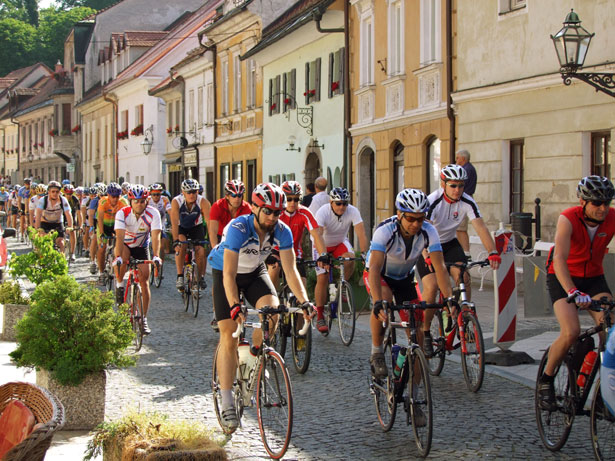
Tour de France Vermont-Style

The Tour de Farms is an annual fund-raising event for three non-profits—ACORN, Rural Vermont and the Vermont Bicycle & Pedestrian Coalition—all working in their own ways to make Vermont more sustainable and healthy.

Held this year on Sunday September 18th, the bicycle event begins and ends in Shoreham on the western side of Vermont. There are three route choices varying in length—10, 24 and 30 miles long. All routes go by various family farms which will be offering food tastings from seventeen Vermont producers and NOFA-VT will be cooking pizzas on the Orwell Green.

Sample the Tour here.

The Tour ends on the Shoreham Green for AppleFest, a harvest festival with food, music and crafts.

The Tour costs $25 for advance registration, $50 on the day.

The Tour is sponsored by American Flatbread, Earl's Cyclery & Fitness, Wolaver's Organic Beer and Vermont Fresh Network.


Excerpted from the upcoming App Vermont Eats: The Essential Green Travel Guide—available soon on iTunes.


Photo courtesy http://www.publicdomainpictures.net/view-image.php?image=938&picture=bicycle-marathon, Bicycle Marathon by Vojko Kalan

Friday, September 9, 2011

App Mania

Busy, busy, busy here producing The Essential Green Travel Guide series of Apps. Green Venice is live and selling swiftly!

Next up is Vermont Eats—a tour de force of the great, green, groovy food scene in Vermont. Vermont Eats has over 400 entries, 1300 photos, all searchable by price, region and type of business including farmer's markets, artisan cheeses, farm-to-table restaurants, micro-breweries, pizzas, gluten-free foods, vegetarian options, organic farms, health food stores and about thirty more categories—all easy-to-find with built-in Google maps.

Vermont Eats will be live within two weeks so stay tuned for the launch date. A must-have for both residents and travelers—you won't want to leave home without this App!

Tuesday, February 15, 2011

Organic Chai for the Caffeine Sensitive.....in Vermont

Always on the search for divine, but caffeine-free beverages (as opposed to decaffeinated which usually have a tiny amount of caffeine—enough, sadly, to set me off), I have happily found my replacement for chai tea, a particular favorite of mine.

As I have been working on my new Green Travel App for Vermont foods and eateries I have found some wonderful products, including much to my delight, Chai Wallah. Tucked away in southern Vermont, Neil Harley uses his experiences as a chef and world traveler to create authentic chai teas and spices. Chai Wallah is certified as an organic processor, since they use only certified organic and fair-trade spices and teas grown by indigenous farmers around the world. Without Neil and his expert blending, my chai would not be the same.

The recipe is simple—brew up a pot of Rooibos tea (pronounced roy-bus), a South African legume tea. My favorite brands are Equal Exchange and Chai-Wallah, both organic and fair-trade.

To the Rooibos tea add 1 teaspoon of Chai-Wallah's Chai Spice-Only (sans organic teas).

I let it steep and then,  hmmm…. enjoy with no ill-effects. Thank you Neil for making a tremendous chai-spice blend for those of us who need to (regrettably) abstain from caffeine. For a milky version add your favorite organic milk (cow, goat, soy, rice or other).*

If you are on the road and want to enjoy some of Chai-Wallah's offerings you can find their products at the Brattleboro Food Co-op in Brattleboro, Vermont, where they sell the dry mixes in the bulk department and serve freshly made Chai-Wallah at the deli, available with soy or cow's milk.


*The soy milk I recommend is Vermont Soy Plain soy milk which is prepared from Vermont-grown, organic and GMO-free soy beans. The Unsweetened "flavor" has no sweeteners or flavors and has the highest protein content so also the highest isoflavone content—phytonutrients which some women find helpful with their menopausal symptoms.

Sunday, January 2, 2011

Traveling Raw


“It’s alive!” my teenage son jokingly howled as he took a bite of food we were sampling at a restaurant recently. There was no monster from the black lagoon or flies in his soup, but rather a medley of “raw” dishes prepared to gourmet standards at New York City’s One Lucky Duck café near Union Square.

"Raw food" usually conjures a pile of uncooked vegetables—or "rabbit food" as some people like to refer to it—but that evening we were eating tortillas, spicy Thai wraps, lasagna, chocolate ganache and almond-buttercup ice cream. Our meal was varied in its flavors, textures, scents and presentation. Other than the Mediterranean salad and the chunks of avocado in the delicious guacamole that came with our tortillas, nothing we ate could have been remotely described as “rabbit food” (although I have nothing against “rabbit food.”)

While the term "raw" provides a short, quick description of uncooked food, it is not the most accurate term for the burgeoning world of foods prepared below 118ºF. The term "live" is much more apt as it properly describes the important elements of this style of eating, where the enzymes, nutrients and beneficial bacteria of foods are kept vital and accessible when prepared below temperatures that destroy these essential compounds.

Live-food is more than salads and juices. Live-food involves understanding ways to make food more digestible and assimilable. This means knowing how to unlock nutrients and generate healthy fermentation. Nuts, for instance, become much more digestible when raw nuts (those that are not roasted) are soaked for one to four hours. Legumes, such as lentils, are best soaked and slightly sprouted, as are seeds—making them "live" as if for germination.

Many cultures use natural fermentation as a food-storage tool as well as to create healthy foods eaten daily such as traditional sauerkraut or kimchi—a term referring to countless variations of fermented vegetables and spices, considered a traditional, staple dish in Korea. Live-food chefs and devotees have developed a variety of techniques and recipes which successfully transform piles of raw vegetables, fruits, nuts and seeds into gourmet meals, both delicious and satisfying.

Skeptics might question the ability of live-foods to satiate, but research has found that live-foods nourish the body more efficiently than their equivalent in cooked food. For example studies have shown that soaking and sprouting can increase the nutrient content of beans, nuts and seeds by 300 to 600 times.

In addition to increased nutrients, live-food meals are usually free of common allergens such as gluten, eggs and cow-dairy. However people with nut allergies might find the diet challenging since many live-food recipes rely on nuts. There are variations on the live-food theme and not all live-food advocates are vegan (animal-product-free). You can find live-food enthusiasts who consume raw fish, raw meat, and cheeses and milk from unpasteurized milk, but many live-foodies stay clear of animal products and so the diet tends to be suitable for vegans and vegetarians.

Live or raw food is not a new concept. Cultures all over the world utilize aspects of live-food production and have done so for millennia including the aromatic (some would say stinky) cheeses made from raw milk in France and other countries, Korea’s kimchi, traditional kefir (fermented milk) in Eastern Europe and Middle Eastern countries, Himalayan gundruk (fermented vegetable leaves), countless local, small-batch fermented beverages around the globe from beers to kombucha (fermented tea), and of course the bounty of fresh fruits and vegetables in tropical climates. Some of the basic components of the health-acclaimed Mediterranean diet involve live-food with its emphasis on local, fresh fruits and vegetables, olives and extra virgin olive oil.

In the United States live-food has been promoted for decades by health enthusiasts such as Ann Wigmore and Max Gerson who have advocated eating live-food as a form of cancer prevention and treatment. Other live-food proponents past and present include Weston Price, DDS, Norman Walker, Gabriel Cousens, MD, Victoria Boutenko, Donna Gates, David Wolfe, and numerous brilliant chefs. Naturally detoxifying, some health benefits that have been associated with live-food diets include weight loss, increased energy, reduction of inflammation, and longevity.

Before you start experimenting with live-food cuisine on your own I suggest going to one of the restaurants listed below to see what a live-food meal can be like. You might be surprised at the fresh, clean sensations, the spectrum of flavors and the lack of post-meal gut distention. That said, be forewarned that meals in restaurants specializing in live-food are not cheap. Live-food requires a huge amount of prep time and uses perishable foods including avocados (big in live-food menus). Anyone who has tried to keep a bunch of avocados on hand to ripen knows how challenging and potentially expensive that can be.

If you are experimenting at home be apprised that live-food represents an utterly new way of preparing food that takes a bit of adjustment. It is not simply replacing conventional products with organic, or processed with unprocessed. Your kitchen world shifts to soaking (a large part of raw food prep) and planning ahead (not a bad thing). Equipment needs change from pots and pans to blenders, food processors and a dehydrator—the last being the most foreign to many kitchens and cooks.

You will also have a radically different grocery list. Stocking the pantry will be expensive at first, but once you have the basic foods, you will find it less expensive than meat-based diets or processed foods. The most challenging is keeping fresh greens on hand in the winter. Kale is one of the healthiest and most economical, lasting a fairly long time in the fridge. Easy live-food dishes to begin with are salads, smoothies (made with fresh, raw ingredients only—not mixes), and blender-made soups.

Vitamixers are the gold standard for live-food preparation but are expensive running in the $500 range. If you already own a good blender or food processor those will work. An electric coffee grinder, such as the compact model made by Braun, is good to have on hand for grinding seeds. When looking for a dehydrator—if you get that far—the key is to look for one with adjustable temperature controls and a thermostat since you want to keep items below 118 degrees. Some dehydrators have no controls and dehydrate at temperatures too high for live-food preservation. The Excalibur is the most popular dehydrator among live-food chefs with a price tag around $200. A less expensive option is made by Nesco for around $70.00.

Chefs and restaurants devoted to live-food menus are few and far between, at least outside of California and Hawaii, so travelers trying to adhere to a live-food diet may find it challenging when on the road. Even large cities like New York have less than a handful of restaurants specializing in live-foods. See the resources at the end for some of the raw food restaurants in the United States and the UK.

Entering the realm of live-foods can be exciting and health rewarding, but also frustrating and challenging. While many jump in with both feet this can be overwhelming unless you are fully prepared with the proper basic foods, equipment and determined commitment. For others it is helpful to go easy and gently, building your live-food repertoire, discovering the dishes you love and hate, and listening to your body. This last being the most important—listen to your body, unearth what you hunger for and what truly nourishes you.

Restaurants

Boston area
Prana Café serves all raw, organic, vegan foods. Prana, 292 Centre St., Newton Corner, MA; Tel: 617-527-7726; Web: www.eatatprana.com; open every day from 9 am to 4 pm, open for dinner Sunday to Thursday from 5 pm to 9 pm, Friday and Saturday from 5 to 10 pm.

The Organic Garden Café has a mostly raw/live-food menu. Organic Garden Cafe, 298 Cabot St, Beverly, MA 01915; Web: www.organicgardencafe.com;open Tuesday to Thursday from  9 am to 7:30 pm, Friday and Saturday from 9 am to 8:30 pm, and Sunday 9 am to 7 pm.

The Revitalize Café serves all raw, vegan dishes using locally grown produce. The café does not use products that contain gluten, soy, refined sugars, honey, grains, mushrooms or animal products. Dishes available to eat in or as take-out. Revitalize Café, Tannery Marketplace, 50 Water St., Newburyport, MA; Tel: 978-462-0639; Web: www.revitalivecafe.com; open 7 days a week, Monday to Saturday from 9 am to 7 pm, Sunday from 12 noon to 5 pm.

Experienced live-foodies will be sad to learn that Alissa Cohen’s Grezzo live-food restaurants in Boston and Newburyport are now closed.

Connecticut
Catch a Healthy Habit serves raw, vegan, organic, gluten-free foods. Catch a Healthy Habit Café, 39 Unquowa Road, Fairfield, CT 06824; Tel: 203-292-8190; Web: www.catchahealthyhabit.com; open Monday and Tuesday from 8 am to 3 pm, Wednesday and Friday from 8 am to 7 pm, Thursday 8 am to 6:30 pm, Saturday 9 am to 7 pm, and Sunday 11 am to 6 pm.

Florida

Help Yourself is an extremely environmentally conscious restaurant serving mostly, but not exclusively, raw foods. They make excellent juices and use local coconuts. On Mondays they host an organic food market. Help Yourself, 829 Fleming Street, Key West, FL 33040; Tel: 305-296-7766; Web: www.helpyourselffoods.com; open every day from 8 am to 4 pm with an organic market on Mondays from noon to 7 pm.

Los Angeles
Planet Raw is an exclusively live-food restaurant using all organic ingredients with the exception of its Thai coconuts. It prides itself on its sustainability practices including the use of biodegradable packaging, beeswax candles, clay-painted, non-toxic walls, and environmentally-friendly cleaning products. Planet Raw, 609 Broadway, Santa Monica, CA, Tel: 310-587-1552; Web: www.planetraw.com; open 365 days a year, Sunday to Thursday from 9 am to 11 pm, Friday and Saturday from 9 am to 12 midnight.

New York City
One Lucky Duck and Pure Food and Wine are partner restaurants sharing a kitchen. Pure Food and Wine is a fancy, expensive restaurant serving lunch and dinner. One Lucky Duck, around the corner from Pure Food and Wine, is the funky sister serving desserts, smoothies, juices, and all lunch menu items from Pure Food and Wine. All dishes at One Lucky Duck are available to eat-in or take-out. Pure Food and Wine, 54 Irving Place (at 17th street, 1 block east of Union Sq.), NYC 10003; Tel: 212-477 1010; Web: www.oneluckyduck.com/purefoodandwine; open for lunch from 12 noon to 4 pm, dinner from 5:30 to 11 pm.
One Lucky Duck, 125 E. 17 St, NYC 10003; Tel: 212-477-7151; Web: www.oneluckyduck.com; open 7 days a week  9 am to 11 pm. Also at Chelsea Market, 425 W. 15 St (or enter on 9th Ave.), NYC; open Monday to Friday from 10 am to 9pm, Saturday 10 am to 8 pm, Sunday 10 am to 7 pm.

Caravan of Dreams serves organic, natural meals and half the menu is live-food. Caravan of Dreams, 405 East 6th St. (at 1st Ave), NYC; Tel: 212-254-1613; Web: www.caravanofdreams.net/#/Restaurant; open Sunday to Friday from 11 am to 11 pm, Saturday open until midnight—lunch and brunch are served until 5 pm.

Rockin’ Raw serves live, organic, vegan food employing a variety of cuisines including Peruvian and Creole. Rockin’ Raw, 178 North 8 Street, Brooklyn, NY 11211; Tel: 718-599-9333; Web: www.rockinraw.com; open Tuesday to Thursday from 12 noon to 10 pm, Friday and Saturday from 12 noon to 11 pm, and Sunday from 12 noon to 10 pm.

Texas
Beets Café serves all raw dishes for breakfast, lunch and dinner. Beets Living Foods Café, 5th Street Commons, 1611 W. 5th St., Suite 165, Austin, TX 78703; Tel: 512-477-2338; Web: www.beetscafe.com; open Monday to Wednesday from 8 am to 8 pm, Thursday and Friday 8 am to 9 pm, and Saturday 10 am to 9 pm.

Vermont

Vermont Fiddleheads Café serves smoothies, juices, sandwiches, desserts, kimchi and other fermented foods, that are all vegan, organic and local when possible, with free WiFi available. Vermont Fiddleheads Cafe, 18 Worcester Village Road, Worcester, VT; Tel: 802-223-2111, Web: www.vt-fiddle.com/rawfood/fiddle_heads_cafe.php; open Open Tuesday to Friday 12 noon to 6 pm, Saturday 12 noon to 4 pm.

London, England

Vantra Restaurant serves mostly, but not exclusively, raw foods. It is 100% vegan and most ingredients are organic. Vantra, 11-13 Soho Street, W1D 3DJ, London, UK (near the Tottenham Court Rd tube/subway station); Tel: (011 44) 20-7287-6060; Web: www.vantra.co.uk; open Monday to Saturday from 12 noon to 11 pm, Sunday from 12 noon to 8 pm.

Vitao Restaurant serves mostly, but not exclusively, raw foods. It is 100% vegan and most ingredients are organic. Vitao, 74 Wardour Street, W1F 0TE, London (near the Leicester Square tube/subway station); Tel: (011 44) 20 7734-8986; Web: www.vitaorganic.co.uk; open Monday to Saturday from 12 noon to 11 pm, Sunday from 12 noon to 9 pm.

The InSpiral Restaurant serves mostly, but not exclusively, raw foods. It is 100% vegan and most ingredients are organic, including 100% organic cocktails at the bar. InSpiral, 250 Camden High Street, NW1 8QS, London (Camden Town tube/subway); Tel: (011 44) 20 7428-5875; Web: www.inspiralled.net; open Monday to Thursday 10 am to 10 pm, Friday and Saturday 10 am to 2 am, Sunday 10 am to 11:30 pm.


Raw Food Health Centers

Tree of Life Rejuvenation Center, Dr. Gabriel Cousens;
Web: http://www.treeoflife.nu/home-index/

Hippocrates Health Institute, founded by Ann Wigmore & Viktoras Kulvinskas;
Web: www.hippocratesinst.org

Raw Resources

Supercharge Me—The Movie, by Jenna Norwood; Web:  www.jennanorwood.com

Ani’s Raw Food Essentials: Recipes and Techniques for Mastering the Art of Live Food, by Ani Phyo (Da Capo Lifelong Books 2010)

The Body Ecology Diet: Recovering Your Health and Rebuilding Your Immunity, by Donna Gates (Body Ecology 2006), Web: http://bodyecology.com/

Green for Life, by Victoria Boutenko (North Atlantic Books 2010); Also by Victoria Boutenko: 12 Steps to Raw Foods; and The Green Smoothie Revolution

Living Raw Food: Get the Glow with More Recipes from Pure Food and Wine, by Matthew Kenney & Sarma Melngallis (William Morrow 2009)

Rainbow Green Live-Food Cuisine, by Gabriel Cousens, MD and the Tree of Life Café Chefs (North Atlantic Books 2003)

Raw: The Uncook Book: New Vegetarian Food for Life, by Juliano Brotman and Erika Lenkert (Regan Books, 1999)

Raw Food/Real World: 100 Recipes to Get the Glow, by Matthew Kenney & Sarma Melngallis (William Morrow 2005)

Also by Matthew Kenney, Everyday Raw; Entertaining in the Raw; Everyday Raw Desserts

The Sunfood Diet Success System (North Atlantic Books 2008); Superfoods (North Atlantic Books 2009), both by David Wolfe; Web: Web: www.davidwolfe.com

Tuesday, November 23, 2010

Green Earth Guide Calendars with Full-color Photos

New, just in time for the holidays!
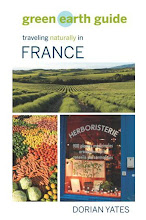
Now you can explore the Green Earth Guide sites from your own home with full-color photo calendars—companions to the award-winning Green Earth Guide: Traveling Naturally Guidebook series.
Six different calendars are available:
(see calendar cover photos at left)
Ireland
Italy
France
Spain
Switzerland
Vermont Organic
To conveniently order online see the Google Checkout box on the right side of the blog. Calendars are $ 14.95 each plus $ 5.00 s/h. If you are ordering multiple calendars, the shipping costs are $5.00 up to three calendars. Over 3, please add an additional $1.50 per calendar.

Thursday, September 23, 2010

Green Day in NYC: Part 2

PART 2


......there I was at Dickson's Farmstand and remembered my poring spouts. I walked towards the Tenth Avenue entrance of the Market and found what appeared to be a not so large storefront stacked with glassware. I felt a pang of disappointment thinking this was an outlet store for cheap glassware and dishes. How wrong I was. Beyond the glassware, the store opened up into a beehive of customers and kitchenware.

Bowery Kitchen Supplies, for both professionals and home cooks, is an orgy of cookware and utensils. I found not just one, but four choices of pouring spouts for my olive oil tasting and managed to get out of there with only my six spouts - it was close though, as every aisle and shelf had either a useful, beautiful or intriguing item calling my name.

By this time I had worked up a hunger and while there were numerous choices I opted for The Green Table specializing in organic and local foods from area farmers. They serve organic meat as well as organic vegetables and beverages. The farms they purchase from include Hawthorne Valley Farm, a biodynamic farm in upstate New York, Flying Pigs Farm, Old Chatham Sheepherding, and many others. For people such as myself that must regrettably steer clear of caffeine, The Green Table offers a refreshing Iced Upaya, which is spiced Rooibos (pronounced roy-bus), a South African legume tea.

Satiated, I left the Market and headed east on 15th street passing The Rudolf Steiner Bookstore offering the largest selection of Steiner-inspired books in New York City, and The Tibet House, an educational center promoting Tibetan culture including a lending library, art gallery, and courses.

Fifteenth Street dead-ends into Union Square Park which seems to have perpetual green market stalls as well as craft and gift vendors. Consider Bardwell Farms makes especially fine raw milk goat cheese from goats fed on pesticide-free pastures in Vermont and you will find their stand towards the north end of the park.

On this fresh September day their was a two-day open air exhibit, Sukkah City 2010, with twelve unusual and creative Sukkahs. Sukkahs are temporary structures built as part of the seven-day Jewish agricultural and harvest festival Sukkot. Traditionally Sukkah’s must be constructed using natural materials especially on the roof, and celebrants eat meals and sometimes sleep in the Sukkah for the duration of the festival. View the Union Square Sukkahs here.

One last stop before making my way back to my lodging was to Astor Wines & Spirits, south and east of Union Square. On my way I stopped to quench my thirst at Le Pain Quotidien, a Belgium chain of restaurants serving natural and organic foods with locations all over Manhattan. This one, at Fifth Avenue and 8th Street, was right on my route and I could get a take-out Mint-Lemonade made with organic agave nectar instead of sugar.

Astor Wines is a large store stocked with a huge assortment of wines and liquors, including organic varieties. I was on the search for organic gin to go with my just purchased organic Q-Tonic. I was in luck. Midwest organic grain farmers are getting into the specialty liquor market and there were multiple brands of organic gin as well as vodka.

I opted to try Farmer's Gin, since they serve it at The Green Table. It is made in the United States with certified organic grains as well as Juniper, Elderflower, Lemongrass, Coriander, and Angelica Root.

As soon as I am home I will rustle up some organic limes so I can  mix up a fully organic gin and tonic - results to follow....

Tuesday, August 17, 2010

Organic Summer in Vermont


It is a glorious summer in Vermont this year - plenty of warmth, sun and the usual lush green vegetation. Gardens are bursting and berries are abundant. If you are traveling through the Upper Valley region there are some wonderful spots to seek out. Organic and local farm stands and markets abound including Killdeer Farm stand in Norwich, VT and Cross Road Farm in Post Mills, VT. The fairly large Norwich Farmer's Market is held every Saturday morning from 9:00 am to 1:00 pm on U.S. Route 5 South. Farther west in Woodstock VT you can find the Woodstock Farmer's Market which is a store not an actual farmer' market, selling a variety of local and gourmet foods.

For other fun shopping explore ArtichokeArts - an emporium of Surprises & Delights - located on the Main Street of South Strafford, Vermont.  The owner, artist Kate Siepmann, offers an eclectic mix of antique and new items, many made in Vermont including local hand spun wool and hand crafted products, organic and gourmet foods from Vermont and the globe, handmade books, gorgeous rugs, furniture, kitchenware, unique greeting cards - designed and produced on the premises, Fair Trade Folk Art, mechanical toys, one-of-a -kinds, and many other gems and delights. The store, in an old building one house down from Coburn's General Store (where you can buy local Strafford Organic Creamery milk and ice cream), is spacious, beautiful, fun and full of surprises.

Yard sales, second hand stores and flea markets are plentiful in the area as are all sorts of hiking possibilities including Smarts Mountain in Lyme Center, NH on the Appalachian Trail and farther away, Mount Moosilauke. In Woodstock VT there is Mt Tom and Mt Ascutney in Windsor, VT. There are countless other hikes throughout both states.

ArtichokeArts, 220 Main Street (Rte 132), South Strafford, VT 05070; Tel: 802-765-4335; Summer open Thursday to Sunday 11:00 am to 5:00 pm or by appointment; Call for winter hours
Killdeer Farm Stand, 163 Us Route 5 S, Norwich, VT 05055, Tel: (802) 649-2852
Crossroad Farm Stand, West Fairlee Cross Road, Post Mills, VT; Greenhouses and Farm Stand Open daily from April 24th through Mid October from 9am to 6pm
Woodstock Farmer's Market,  468 Woodstock Rd., Route 4, just outside the village of Woodstock; Tel: 802-457-3658; Open Tuesday to Saturday from 7:30 am to 7:00 pm, SUndays from 9:00 am to 6:00 pm- Sandwiches at the deli made and served until  4:00 pm. Closed Mondays.
For a complete list of Farmer's markets throughout Vermont visit the Vermont State Department of Agriculture web site and find organic farms in Vermont at NOFA.

Saturday, December 12, 2009

Salt Caves For Natural Health


I find myself quite intrigued with the therapeutic qualities of salt caves. A simple, low-tech therapy (especially when done in natural caves), salt caves have been used in Eastern Europe and Russia for hundred of years for treating lung and nasal illnesses, particularly asthma and allergies., with antibacterial, anti-inflammatory and immune system modulating properties.  Research has found that sodium chloride (salt) especially when delivered with negative ions is beneficial for lungs and sinuses, dissolving thick mucus

Called Speleotherapy, cave therapy involves spending an hour or more in an underground natural salt or karst (limestone) cave where the combination of minerals and electronegative charge are particularly conducive to treating chronic and allergic respiratory conditions. People suffering from such ailments are recommended to have cave sessions every day for two to three weeks as part of a whole treatment plan.


Halotherapy does not involve angels as the name might imply, but is rather therapy in fabricated caves, using special technology that aerosolizes salt, mimicking natural salt caves. Halotherapy is becoming increasingly popular in the United States and Europe, where spas and clinics are installing fabricated salt caves to be used for allergy and asthma sufferers, as well as for relaxation and preventative care. 

Natural Caves include the Bystrianska cave in Banská Bystrica, Slovakia; Tel: +421-48-413 53 12; Email: sdluholucky@nspbb.sk AND vrajcanova@dfnbb.sk; Web: http://www.speleoterapia.sk/indexe.htm; AND http://www.visitslovakia.com/bystrianska-cave


The Underground Rehabilitation and Treatment Centre is an independent healthcare facility that is part of the Wieliczka Salt Mine Tourist Route (Kopalnia Soli Wieliczka – Trasa Tusrystyczna) in Poland. Quite an impressive facility, the salt mines have been used for therapeutic purposes for hundreds of years. Today the Treatment Centre is a full on treatment and research facility, providing respiratory rehabilitation 440 feet below ground. 


There are overnight treatments as well as day treatments with nearby hotels for day users. Medical consults and diagnostic tests are part of the program as are exercises and other activities. Daily sessions last six and a half hours in the mine, and fourteen-day stays are standard, with seven-day health packages offered as well. The Wieliczka Salt Mine Underground Rehabilitation and Treatment Centre, 32-020 Wieliczka, Park Kingi 6; Tel. +48 12 278 73 68; Email: sanatorium@kopalnia.pl; Web: www.sanatorium.kopalnia.pl


Fabricated Salt Therapy “Caves”: 


You can find Halotherapy salt caves in Rutland, VT, Williamsburg, VA, Illinois, Florida, and other locations in the United States, as well as in London and Lincolnshire, UK. Dr. Margaret Smiechowski, a native of Poland, has brought her knowledge of salt caves to the United States where she is considered an expert in salt therapy installations. For more information about her work see http://www.saltcavevt.com or visit the website of the Pyramid Holistic Wellness Center in Rutland Vermont.


In London, a newly fabricated salt cave has opened in a renovated church. Allergy & Asthma Ltd opened the cave to offer natural treatments for allergies and maladies of the lungs. Salt cave sessions are available by appointment only. Allergy & Asthma Ltd., 320B, Earlsfield Road, United Reformed Church, London, SW18 3EJ; Tel: 020 8870 6006; E-mail: info@saltcave.co.uk; Web: http://www.saltcave.co.uk; open Monday to Friday from 8:30am to 8:00 pm, Saturday from 9:00am to 5:30 pm.


Indium is a company in Estonia that manufactures salt rooms and individual salt “cocoons” – sort of like saunas but rather than heat you are getting aerosolized salt therapy. Indium Top LLC, Paldiski Road 68, Tallinn, 10617 Estonia; Tel: +372 6715 774; Email: iiris@salt-therapy.eu; Web: http://www.salt-therapy.eu 

Saturday, June 20, 2009

Vermont Local Food and Drink


If you live in Vermont or are visiting for the summer, you can find farmer’s markets and locally produced food throughout the state. The Vermont Agriculture Department has a searchable map on their web site to help you locate farmer’s markets, farm stands, pick-your-own farms, CSA farms, apples, and other Vermont specialty products. See http://www.vermontagriculture.com/buylocal/buy/farmstands_map.html.

At the Web site for the Northeast Organic Farming Association of Vermont (NOFA VT), http://www.nofavt.org, you can search for organic farms by county or by product. And at the Local Banquet Magazine Web site, you can explore their excellent Links page for a comprehensive list of localvore-local foods Web sites - http://www.localbanquet.com/links.html.

If you are particularly looking for local beer and wine, there are microbreweries and wineries around the state. The Vermont Brewer’s Association has a handy map and list of the local breweries, wineries, and cider houses, see http://www.vermontbrewers.com/tours.html.

If you happen to be driving to Vermont from the south, you can stop in Greenfield, Massachusetts to enjoy The People’s Pint Restaurant & Brewery, open everyday from 4:00pm, committed to serving local food and their own beer since 1997 – check it out on the web at: http://www.thepeoplespint.com.

Happy delicious local eating!