Showing posts with label SPAIN. Show all posts

Wednesday, June 29, 2011

Spanish Liquid Sunshine from Soler Romero

Most people don't realize that Spain, not Italy, is the largest producer of olive oil in the world. Organic olive oils are becoming increasingly available and one of the largest producers of organic olive oil in Spain is the family-run Soler Romero.

Situated in the Spanish province of Jaen in the southern region of Andalucia—the largest olive and olive oil producing area in Spain—Soler Romero uses only its own olives and does not buy from other farms or cooperatives so as to maintain the strictest control over the quality of their oil. They compost and recycle all the scraps and waste from their olive groves.

In business since 1850, Soler Romero was the first olive farm in Jaen to follow organic farming practices and was also the first to receive organic certification from the USDA in 2002. They also are certified organic by the European Union, Japan, and China as well as the local organic certification area for the region of Andalucia.

The estate's more than 1500 acres produce 700,000 pounds of olive oil every year from the picual olive variety, high in antioxidants, which makes the oil stable. Every stage of the process is performed on the estate, including processing the olives within two hours of harvest making for a very low-acidity oil— 0.10 percent (to be considered extra virgin an oil must be below 0.80 acidity). Soler Romero chooses an early harvest time, between mid-October and mid-November, which they feel results in the perfect oil made with ideally ripened olives.

Soler Romero olive oil is available in Spain, and also in the United States as well as other countries—including the UK, Canada, the Netherlands, Russia, Japan, China and Korea. If you live in Portland, Oregon (or are visiting) you can find Soler Romero oil served at Higgins Restaurant. Badger organic health balms and creams uses Soler Romero organic oil in their organic body-care products.

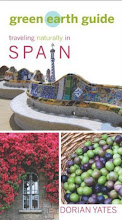
For more information about Spain's organic olive oils see the Green Earth Guide, Olive Oil: An Olive Oil Lover's Guide to the Organic Oils of Spain, with listings of forty organic oils and tips on having olive oil tastings. Use the Guide to help you tour through olive groves and estates, sampling Spain's liquid sunshine as you travel through Spain.

Saturday, June 4, 2011

Finally! A Portable Glass Water Bottle

My choice of portable water bottle is a perpetual conundrum for me.

Plastic has the longest list of undesirable features. For starters I honestly can't stand the taste of water sitting in plastic. Then, beyond taste, there is the issue of the plastic chemicals leaching into the water causing all sorts of potential health problems. While bisphenol-a (BPA) is the newest culprit on that list, the issues of plastic-leaching containers has been around for decades. Over thirty years ago I worked for the New York Public Interest Research Group (NYPIRG) where in the early 1980s a brilliant scientist named Walter Hang (who now works for Toxics Targeting) released a ground-breaking report about HDPE plastic (commonly used in one-gallon water jugs and milk containers) leaching into water and milk. While true that harder plastics seem to leach less than softer plastics, the recent BPA reports have shown that all sorts of plastics have potential problems. As if that weren't enough, there is the perennial predicament of the environmental consequences of plastic manufacturing and disposal. So while plastic bottles are light and seemingly easy, they fail as a good choice on many other counts.

The next light-weight option is aluminum. I do not use aluminum cookware or anti-perspirants made with aluminum—any substance that might contribute to my already challenged memory I try to avoid  as best I can. So needless to say, sipping water from an aluminum bottle is not high on my list.

Then there is stainless steel, or at least what we are told is stainless steel. Some may say I am too picky, but I suspect that a lot of what is sold as stainless steel is not, but rather mixed with metals that I would rather not be drinking from.  That, coupled with the metallic taste, makes stainless steel a tempting but non-option for me.

This leaves me with glass or gourds. Sadly, gourds are not practical. Glass would be perfect were it not for it being heavy, highly breakable, and difficult to find the correct bottle shape for both drinking and cleaning (that is, wide enough to clean, but narrow enough to drink from comfortably without dripping everywhere).

You can see why walking out of the house (or lodging when I am traveling) with a water bottle poses such a dilemma for me.

I am happy to report that I have found the answer to my quandary. Based in neighboring Portsmouth, New Hampshire, the Bamboo Bottle Company has designed a water bottle comprised of glass, BPA-free plastic and bamboo.

This is how it works. The actual bottle is made of sturdy glass (made with 51% recycled glass) which can hold hot or cold beverages— a huge advantage over plastic. The mouth of the bottle meets my requirements—wide enough for easy cleaning, while appropriately-sized for dripless drinking. The BPA-free plastic provides the nuts and bolts of the bottle, keeping the glass in its protective and insulating bamboo casing. The components disassemble for cleaning—you can hand wash the glass bottle or put it in a dishwasher (the plastic parts can go in the dishwasher as well, but keep the bamboo sleeve out of the machine and even the sink—simply wipe clean with a damp cloth for the longest life).

The Bamboo Bottle holds just over a pint (16 ounces) of liquid and has a thermos-like feel to it. With the top on, the bottle is 10.25 inches tall and 3 inches in diameter, just making the size-cut for my small hands.

No plastic or metallic after-taste or leaching—check. No exposed, breakable glass—check. Reusable, low-impact materials with a long-life span—check. While close to perfection, I do hold out hope that some day the plastic parts can be made from a sustainable, non-polluting material (the company says they are aiming for plastic-free in the future). Until then, I will be happy with my Bamboo Bottle and cross the search for the perfect water-bottle off my to-do list.

Friday, February 25, 2011

Olive oil: an olive oil lover's guide to the organic oils of spain

The new Green Earth Guide to the organic olive oils of Spain is now available on Amazon!

Olive Oil: An Olive Oil Lover’s Guide to the Organic Oils of Spain
is for any connoisseur or lover of olive oils. Passionate about olive oil, Dorian Yates, author of the award-winning Green Earth Guide series to traveling naturally and ecologically in Europe takes you on a tour of the abundant, fresh olive oils produced organically in Spain. Olive Oil includes historical and cultural information, growing and processing techniques, as well as full listings of over forty oils. Her mouth-watering guide to Spain’s organic olive oils makes you want to break out the dipping bread and start tasting.

Buy the book and start tasting the over forty delicious oils listed in the Guide. Some of them are available in the United States, others you will have to travel to Spain to enjoy.

Monday, January 31, 2011

Wanderweg—The Magic of Walking in Switzerland

The Wanderweg (W’s are pronounced like V’s in German) is the term used for the more than 31,000 miles of walking trails in Switzerland. Walking the Wanderweg is a common Swiss past-time and it is quite usual to see Swiss hikers of all ages on the trains heading to or from their hikes with rucksacks and walking sticks in hand.

The Wanderweg is posted with orange signs to keep you on course and every so often there will be directional signs with estimated time and kilometer distances. Consider that while many of the routes on the Wanderweg are roads of various sizes, there are also numerous stretches that are mere foot- or sheepworn paths through a field or pasture, or even a lawn!

Take your time. Never be in a rush when starting out on a new Wanderweg route. Much of the fun and charm have to do with the adventure of making your way through the beautiful landscape. Another wonderful aspect of the Wanderweg is that it is not just for recreation and sightseeing. The Wanderweg is practical. If you have figured out your route—you can walk to your destination be it clinic, store, attraction—no need for cars, or public transportation. Or for variety you can take advantage of all options, walking one direction and taking public transport for your return, or walking both ways, but taking different routes. A word to the wise—be prepared for steep walking—both uphill and downhill—Swiss walking is not for the weak-kneed.

One of the pilgrimage-walking routes to Santiago de Compostela (St. James Way or Jacobsweg in German) in Spain goes through the Fribourg area of Switzerland. See the Swiss site for Santiago routes in English.


Excerpted from the Green Earth Guide: Traveling Naturally in Switzerland

Monday, January 10, 2011

Slow Food Spain

Last week, "alive" food. This week slow….. and not as in eating snails (even though that is the Slow Food logo) and sloths, but rather, slow as in the promotion of whole food meals prepared fresh from local and seasonal foods.

In Spain, the Slow Food Farm-to-Table project, called Km 0, certifies restaurants serving local, organic and indigenous foods that have come from farms less than 100 km (62 miles) away. Close to sixty restaurants around Spain have been recognized as Km 0. The highest concentration of Km 0 restaurants are in the Catalonia and Basque regions. The rest are scattered around the country. A couple are listed specifically in the Green Earth Guide to Spain—Kimpira in Valencia and Gaia in Sevilla.

Founded in Italy twenty-two years ago, the Slow Food movement mission is five-fold—to defend food biodiversity, safeguard the environment, advocate sustainable agriculture, protect small producers and their communities, and foster the gastronomic traditions of the world. Within that broad purpose, Slow Food has many projects including Farm to Table/Km 0 and the Ark of Taste. For restaurants in Spain to be accepted in the Km 0 program they must serve at least 5 dishes on their menu made avoiding GMO foods and with a minimum of 40% ingredients from local producers and 60% from foods that are organic or identified in the Ark of Taste project. The Slow Food Foundation for Biodiversity Ark of Taste project catalogs and promotes indigenous foods at risk of extinction. More than 900 foods from fifty countries have been identified so far. In Spain this includes seventy-nine foods—some olive oils, olives, fruits, vegetables, herbs, cheeses, meat, fish, grains and wines. Restaurants are reviewed annually to make sure they are maintaining compliance with the Km 0 requirements.

Thanks to Slow Food España for administrating the Km 0 project and for providing the list of Km 0 participating restaurants. To find the Spanish restaurants approved as Km 0 visit the new 2010-2011 list of restaurants, organized alphabetically by city:
http://cocineros.slowfood.es/2010/12/09/restaurantes-km-0-edicion-2010-2011/

Tuesday, November 23, 2010

Green Earth Guide Calendars with Full-color Photos

New, just in time for the holidays!
Now you can explore the Green Earth Guide sites from your own home with full-color photo calendars—companions to the award-winning Green Earth Guide: Traveling Naturally Guidebook series.
Six different calendars are available:
(see calendar cover photos at left)
Ireland
Italy
France
Spain
Switzerland
Vermont Organic
To conveniently order online see the Google Checkout box on the right side of the blog. Calendars are $ 14.95 each plus $ 5.00 s/h. If you are ordering multiple calendars, the shipping costs are $5.00 up to three calendars. Over 3, please add an additional $1.50 per calendar.

Wednesday, September 22, 2010

Green Day In NYC


PART I
The train from Vermont to New York City is neither high-speed or even regular-speed, but tragically a slow-speed, making public transit between bucolic Vermont and New York City limited and difficult. Fortunately the Dartmouth Coach has started a daily service to New York City making the trip not just easy, but luxurious.

After arriving and  relieving myself of my bags, I set off to enjoy the afternoon - a glorious September day in Manhattan - sunny, with a slight breeze and bright blue sky.

My first stop was Kitchen Arts & Letters. If you are a cook or foodie who loves books this is your spot. Floor to ceiling cookbooks, wine guides, food memoirs, books about kitchen design, nutrition and food storage cover this not very large store on the Upper East Side of Manhattan. You can find DVDs of Julia Child’s television show that I vividly remember watching as a young girl on New York’s Channel 13. I was really too young to appreciate the knowledge she was imparting, but coming from a home where no one cooked anything except frozen fish sticks and grilled-cheese sandwiches, I marveled at her kitchen prowess, her voice (which I loved) and found her comforting - like a relative I should have had but didn’t.

Kitchen Arts & Letters has two full shelves of books about the politics of food - not just the more well known books like Food, Inc. (which if you haven’t, you should read - or see the film), but a variety of lesser known but no less important titles.  They also have books for travelers - books highlighting food in different countries as well as right there in New York such as a guide to New York Markets (very useful). Beyond the cookbooks and wine guides, the serious cook will find out-of-print and foreign books available as well.

Next stop was the Idlewild independent bookstore, already a favorite haunt of mine, not just because they sell my Traveling Naturally Guides, but also because they are a specialized store focused on one of my favorite subjects - travel. Organized by country, Idlewild sells not only an excellent selection of guidebooks, but also literature from each country. People living in the city can take advantage of their ten-week language immersion courses concentrating on conversation.

Out of Idlewild I headed west on 19th street to 9th Avenue. I could have stopped at any number of restaurants and shops along the way. When I was a kid in New York, West 14th up through the 20s was not such a great area. Now it is a happening scene. Beautiful tree-lined residential streets are mixed with interesting, often trendy, stores and eateries.

Instead of getting distracted, I kept my focus. I was on the search for olive-oil pouring spouts for a Spanish olive oil tasting I am hosting next week and a cook-extraordinaire, cookbook-writer friend of mine had tipped me off to a kitchen supply store in the Chelsea Market on 9th and 15th St.

The Chelsea Market, a former Nabisco factory, was transformed in 1997 into foodie heaven. Specialty, gourmet and green eateries dot the refurbished factory intermixed with stores selling  books, liquor, housewares, and gifts. The Oreos may be gone but there are plenty of devilishly delicious treats to eat at almost every turn.

Chelsea Market Baskets offers an eclectic selection of baskets, gourmet treats, chocolates, housewares and baby items. I was delighted to see they carried three favorite products of mine. LA Organic olive oils from Cordoba, Spain (not Los Angeles as the name might imply); Askinosie chocolate made in small-batches with organic sugar and goat milk – it is incredible!; and Q Tonic, the best tonic water I have found made with organic agave syrup (no sugar or high fructose corn syrup) and real quinine.

I did not shop at Dickson’s Farmstand meats, but went in to survey the organic offerings. Set up as an old fashioned butcher shop, Dickson’s sells organic and local meats including beef, lamb, pork, goat and poultry, all raised without hormones, animal by-products and prophylactic antibiotics. If you want fully organic ask for which meats are certified........


continued tomorrow in Part 2...

Tuesday, June 22, 2010

Divine Combination - Olives and Wine from an Organic Vineyard in Cadiz

In the wild mountains of southwest Spain in the province of Cadiz and in the area of Jerez de Frontera- known for Sherry- is the organic vineyard of Viña Greduela-Sierra de Lijar. Situated on the banks of the Guadalete River, the  vineyards contain a mixture of four grape varieties - Merlot, Syrah, Cabernet Sauvignon and Tempranillo - all of which are harvested by hand. Viña Greduela produces three wines: Artesanal Crianza 2007, Coupage Cosecha 2008 and the winner of the prestigious organic award, Biofach Mundus Vini GOLD Germany 2010, their Coupage Crianza 2007.

The Coupage Crianza 2007 is an exceptional dry, dark red wine with much depth and flavor and a smooth after taste - wonderful on its own or with a meal. You can enjoy it while eating bread dipped in their special olive oil as well.

The Sierra de Lijar Aceite de Oliva (Olive Oil) is strong and fresh - utterly delicious and certainly one of my favorites. The olives used -mostly Lechín and Manzanilla varieties - are native to the region and come from olive trees that are hundreds of years old- some even as old as one thousand years. The production is limited due to low yields from such old and wise trees as well as difficult harvesting because of the mountainous terrain which means no motorized vehicles but rather humans on foot accompanied by donkeys or mules.

Both the olive oil and the wines are treasures from the Sierra de Lijar - look for them when in Spain and if you want to visit the vineyard email or call in advance.

Ecologia Sierra de Lijar, Parque Tecnológico Agroalimentario • Parcela 6.12 • Jerez de la Frontera, (Cådiz) Spain; Tel:(34) 956 310 972; Email: info@ecolijar.com

Tuesday, June 15, 2010

New and Old Organic Discoveries at the Mercado Central


I love that I can discover new wonderful places even after ten months of living some place. Yesterday I went down one of the many aisles at the Mercado Central and discovered SuperGourmet where lovely Ana showed me the many local products they carry as well as the organic (ecologico) selections. SuperGourmet actually has three stalls in the Mercado Central de Valencia (Central Market) - one for cheese and cured meats, one with fresh baked goods including breads, pastries and olive sandwich rolls, and the third with a very full selection of foods and wines from Spain as well as gourmet products from other countries.

SuperGourmet offers a number of organic products including LA Organic olives oils from Cordoba, Spain (not Los Angeles), local, organic Valencian Orxata de Xufa (horchata de chufa in Castilian- see below), Cueva wine from Utiel-Requena, plus a myriad of other local products - rice from the Valencia region, salt from Andalucia, seaweeds from Galicia, pates, jams and honey. At SuperGourmet you can taste much of what they offer and they sell sample sizes of a number of products which make great gifts.They can also prepare platters, picnics and cater for parties, or you can buy the supplies yourself for a fantastic picnic.

A note about Orxata de Xufa for visitors to Valencia - it is a very popular beverage in Valencia having been introduced by the Arabs hundreds of years ago. You will find it sold on street corners and most cafes. The botanical name for the xufa (or chufa) is Cyperus esculentus, an edible tuber used to make a "milk"- horchata. The organic brands simply contain paste of the chufa and organic sugar. Other varieties can have additional ingredients. The prepared versions can be a little heavy on the sugar for my liking but you can buy the dried chufa and make your own milk and sweeten it to taste. You can find bags of the chufas with instructions at SuperGourmet .

A few aisles down in the market you will find a favorite organic stall, La Morhada, run by wonderful Lucia. Here you will find all manner of organic products and a bouquet of produce. Favorites here include the sheep and goat cheese from Los Corrales, as well as the divine organic fruits and vegetables.

The Mercado Central, a beautiful indoor market, is open from 8:00 am to 3:00 pm Monday to Saturday although sometimes individual stalls have slightly different hours.

Saturday, June 12, 2010

A Summer Salad from Spain - Cool, Delicious & Healthy, Organic & Local!

Being from New England I am especially appreciative of long growing seasons since ours feels like about one week long. Spain's growing season is virtually never-ending with something to harvest any time of the year. We have passed through orange season, strawberry season, are in the midst of cherry season, and of course pretty much all year is salad green season.

As the days grow warmer and hotter here in June I am naturally drawn more to salads and living in Spain, I have grown very fond of sardines. Sardines are a great fish choice in general and so easy for salads. They are high in healthy omega-3 fats and, being small and low on the food chain they do not contain the large amounts of mercury found in tuna - a common salad protein ingredient. Here is a delicious, easy and inexpensive salad made with all fresh and local ingredients which you can even make in New England although the olives and sardines will obviously and unfortunately not be local.

Spanish Sardine Salad
Pepiños (cucumbers) chopped
Pimentos rojas (red peppers) chopped
Mezclum (Mesclun) salad mix
Mache (cornsalad/Valerianella locusta)
Rucula (arugula)
Olives sliced
Sardines - 1 tin - Sardines from the Galicia region of Spain are the best packed in olive oil - mash up with a fork
Drizzling of Olive Oil (see the upcoming e-book Olive Oil...An Olive Lover's Guide to the Organic Oils of Spain for a choice of over 35 organic olive oils available soon on this blog)
Drizzling of Balsamic Vinegar

and....EAT!
You can serve the salad with a side of olive-rosemary bread drizzled with olive oil, or a little grated Manchego sheep cheese.

Tuesday, June 1, 2010

Deep Organic and Groovy in Valencia

The longer I am in a place the more opportunity  I have to sniff out its organic and groovy world and Valencia is full of surprises. In the Green Earth Guide: Traveling Naturally in Spain, I cover many sources for organic and natural foods, but Valencia has other gems slightly hidden from the beaten path which I am listing below. Wherever you go remember to bring your own bags!


This coming weekend (Friday June 4 through Sunday June 6) is the 23rd Fira Alternativa de Valencia (Alternative Fair of Valencia)  featuring all organic and alternative foods and goods with many local artisans and farms represented. The fair, open from 10:00 am to 11:00 pm each day, will be in the Turia Park between the Bridge of Flowers and Calatrava Bridge. 

The new, airy Bio Basic Supermercat Natural, is next door to the Gobinde Yoga studio in the Russafa neighborhood of Valencia. Bio Basic sells teas, personal care products, supplements, dry goods, some gluten-free foods, and they have a small refrigerated food case and some produce. If you bring your own bag(s) and pay with cash you can get a 3% discount. BioBasic, calle Pintor Salvador Abril (Abrir) 31, 46005 Valencia; Tel: 963 349 327; open Monday to Friday from 10:00 am to 2:00 pm/5:00 pm to 8:30 pm, Saturdays from 10:30 am to 2:00 pm.

L'hortet is a cute health food store in Russafa. While not large it is well stocked with a full range of products including produce and some interesting choices - that is some products not commonly found at the other health food stores in Valencia, for example some of  the Mon Deconatur body-care products which are high quality and made in Spain. A favorite of mine is the Alcohol de Romero (Rosemary Alcohol) excellent for rubbing on tired feet at the end of the day. The Mon Deconatur product is simply made with wild rosemary, lavender and bitter orange alcohol extracts. While not in the general tourist zone, L'hortet is only about five blocks from the train station and only about one to two blocks from the Russafa Mercado. L'hortet Ecologia Vital, Calle de Cadiz 38, Valencia; Tel: 963 126 372; Open Monday to Friday from 10:00 am to 2:00 pm/5:00 to 8:30 pm, Saturday from 10:00 am to 2:00 pm

Just outside of the north part of the old city, out past the Serranos Towers is Ecologicos La Llavoreta, a sweet coop food store with organic, mostly Spain-grown, produce, and a variety of other dry goods and dairy, a little slim on gluten-free. The Ecologicos LaLlavoreta, c/ Orihuela (or La Oriola) 14, 46009 Valencia; Open Monday 11:00 am to 2:00 pm/5:00 to 8:00 pm, Tuesday to Friday from 10:00 am to 2:00 pm/5:00 to 8:00 pm and Saturday from 10:00 am to 2:00 pm.

On the same street as the Amnesty International Valencia offices in the old part of Valencia a few blocks from the Quart Towers there is a small Fair Trade store with some delicious treasures but limited hours. Tenda de la Solidaritat, Calle Carniceros 8 (on the corner of Calle Villena); open Tuesday, Wednesday, Thursday from 6:00 to 8:30 pm, and Tuesday and Wednesday from 10:00 am to 1:00 pm.

Listed in the Green Earth Guide to Spain, Ecorganic is worth a second mention as a Green Earth Guide Favorite. Ecorganic, out by the University on Ave. Blasco Ibañez, is large and well-stocked with a down-to-earth feel and good selections of everything.

See the recent Traveling Naturally post for information about the new cafe and health food store, L'Eco Russafa.

The La Morhada organic stall at the Mercado Central, listed numerous times in the Green Earth Guide: Traveling Naturally in Spain, is a favorite - and wonderful Lucia always has beautiful produce and food.

There are even more spots which I will cover in future posts- stay tuned. In the meantime, enjoy all the green that Valencia has to offer.

Friday, May 28, 2010

Public Toilets in Madrid, A Rare Breed

A heads up for those traveling to the capital of Spain and hoping for public toilets. While public toilets are fairly plentiful in Paris and other European cities, Madrid seems to fall short even compared with its somewhat rival city, Barcelona. As the Spanish newspaper El Pais reported, there are only thirty-seven supposed public toilets around the city and of these at least eleven are said to be out of order- some for as long as four years!! This brings the number down to twenty-five public toilets in a city of over forty million people not counting the tourists.

It appears that these concrete structures are valued more for the advertising space they provide than the functional purpose of allowing people to relieve themselves. So when in Madrid, best to consider cafes or the train stations as your best source of toilets, and make use of the museum facilities while there. If you do find a working public toilet make sure you have the necessary .30¢ euros for entry. For more on public toilets while traveling in Europe see Toilets and Traveling.

Wednesday, May 26, 2010

Mangiamo! Fresh Pizza with Organic Options


Russafa, the fun, hip, funky and non-touristy neighborhood in Valencia, is surprisingly full of health food stores and good little restaurants. Here you will find Mangiamo, a small pizzeria serving "Italian-style" pizza at its best. With thin crust and fresh toppings, I went for my favorite combination of olives, cherry tomatoes and rucula (arugula). I was delighted to find that the rucula was organic!

Pizzas come in three sizes - individual (small), mediana and familiar (large). The small and medium pizzas are available with the standard crust or made with organic spelt (espelta biologico) flour on request. Mangiamo also serves pasta dishes and salads as well as a few choice desserts like tiramisù. 


Pizza prices run from 5 to 8 euros depending on size and then extra toppings are 50¢ more for each one. The organic espelta crust is an additional 1 euro. Toppings include seven meat choices, seven specialty cheeses, fifteen vegetable options, three fishes and a variety of sauces.

If you are hungry or are feeding hungry people, I would suggest ordering more rather than less of the pizza as the thin light crust and fresh toppings do not make for a heavy filling meal and we found
that two "familiar" pizzas were not enough for feeding four people - we all could have eaten more of this delicious fare.

You may not be looking for pizza while you are in Valencia, but if you get an urge, this is the place to go.

Mangiamo, Calle de Cadiz 21, Russafa neighborhood of Valencia; Tel: 963 413 263; Email: quieromipizza@gmail.com; Web:  www.mangiamo.es; open every day from 11:00 am to 3:30 pm/7:00 to 11:00 pm

Monday, May 17, 2010

Charming Eco Food In Valencia - L'Eco de Russafa


As my son likes to say I have some sort of built in homing or radar when it comes to all things eco. Well it was in full force today while I was exploring the lively and interesting non-touristy neighborhood of Russafa in Valencia, Spain (more on this later). I happily stumbled upon L'Eco de Russafa, a new health food store and restaurant one block from the Russafa Mercado (market). Here I found lovely Isabel who gave me a tour of the store and showed me the ropes about the prepared food.

L'Eco de Russafa has a nice selection of organic food from wine and beer to teas, pastas, sauces, juices, grains, herbs and spices, refrigerated soy and dairy products, and produce, which Isabel explained is delivered fresh every week on Tuesdays. They also carry some personal care and household products,

The restaurant part is set up self-serve style in the rear of the store on a center island surrounded by the produce, dry goods and cooler. Here you will find quite an assortment of delicious hot and cold foods - a mini salad bar and around ten warm dishes some of which contain meat, most of which do not, and some are vegan (no animal products). Isabel assured me all the ingredients were bio (organic). To partake of the prepared food, choose a plate (china for eating in, paper for taking out) and pile on whatever you like. Then bring your dish to the counter up front where it is weighed. If you are eating in, you will be given your eating utensils then. If you simply want a beverage you can order your fresh juice or other drink at the counter.

My full plate (I sampled a little of everything) came to only 6.30. I topped it off with  freshly made fruit juice, for which my choices were limited due to the fact it was Monday and the fresh produce is delivered Tuesday. Isabel suggested a combination of melon, kiwi and apple - not one I would have created on my own - but perfectly delicious and refreshing.

L'Eco is a charming store and restaurant. Isabel clearly loves what she does and the proof is in her food which I must say was buenisimo! - every last morsel I tasted.

L'Eco de Russafa, Calle Donoso Cortes 12, 46005 Valencia; Tel: 963 739 310; Web: http://www.ecorussafa.com; Open Monday to Friday from 9:00 am to 7:00 pm, Saturday from 10:00 am to 3:00 pm.

Friday, April 30, 2010

Eggs in Europe


Travelers from the United States may be quite surprised when they are shopping at markets and in stores in Europe to find that eggs are often not refrigerated. In fact they are often not even in cartons, but available for the picking into your own container.

At the markets in Spain you will find stacks of eggs at egg stands - brown, white, ecologico, conventional. In France, Germany and Switzerland the same holds true. Once the eggs are purchased, most people store them in their refrigerators at home, but some will leave them in a cool spot if they will be using them within a few days.

Part of the problem in the United States is that the food is often subjected to what I refer to as "shelf-life syndrome" where the focus is not on nutritional value or freshness but rather on how long the products will last on the shelves minimizing waste for manufacturers, grocers and big-box stores. As consumers, we loose, of course, since we not only get food altered to last far longer than nature intended, but we also miss out on the vitality, the richness and the beauty that fresh, local food offers.

I am afraid that eggs in the United States meet with the same fate, unless you are lucky enough to live where there are small farms, so hence they are refrigerated to help them last a long time.

When egg shopping I would err on the side of organic especially when buying room-temperature eggs since studies have shown that while all eggs run the risk of Salmonella, only about one quarter of organic and free range have the Salmonella contamination found more readily in conventional eggs, with the bonus that organic eggs have been found to contain more Vitamin E, beta-carotene and omega-3 fats with up to  a third less cholesterol than industrial-produced eggs.

Having spent time on a farm when I was a kid and later having had my own homestead-scale farm, I am familiar with the practice of storing eggs on a cool, shaded shelf especially when they will be used quickly.  I think this was, and is, customary for truly farm-fresh eggs. So don't be alarmed or put off by the piles of open-air eggs while you are traveling and be thankful for the culture of fresh.

Thursday, April 29, 2010

Organic Moon Beer in Spain

While you can find some micro-brewed beer in Spain it is not as abundant as in some other countries, wine being the historical abundant and local alcoholic beverage. But lovers of finely crafted small batch beer will be happy to know that about half-way between the cities of Valencia and Alicante the Articultura Land Cooperative makes special certified organic beer. The Cooperative, located in Agullent, Spain, grew out of a three-fold desire to produce local products crafted with care, employ organic and sustainable land management practices, and generate income with social and environmental responsibility.

The coop produces two organic wines - one a Monastrell, the other Mersequera - as well three different beers. The Lluna (Moon in Valenciano) brand of organic artisanal beer (cervesa artesana ecologica) includes Cervesa Lluna, a golden light beer, Cervesa Lluna Bruna, a brown ale and Cervesa Lluna Negra a dark stout beer.

The beers are sold at certain natural foods restaurants and stores mostly in the Alicante and Valencia areas as well as in a few spots in Barcelona, and only two in Madrid.

In Valencia, one of my favorite restaurants, Kimpira, serves the Lluna beers. Kimpira makes delicious vegan and macrobiotic meals. Their offerings are not regular macrobiotic or vegan fare, but rather beautifully presented gourmet food. You can also find the Lluna beers (appropriately given the name) at La Lluna restaurant and you can hope they are serving their unusual and delicious torta de zanahoria (carrot cake). Health food stores selling Lluna include my favorite Ecorganic ecomercat as well as the Angel Biomercado. If you are in the Girona and Costa Brava area you can find them at my favorite Nana Biosupermercats. Barcelona visitors have to travel farther afield out of the old part of the city for stores offering Lluna beers. See the web site for all store locations under On trober-la.


Salud!

Thursday, April 22, 2010

Thoughts on Traveling, Volcanic Eruptions and Mother Earth

Happy Earth Day - celebrate for a lifetime!


I think it is most appropriate that for the week or so preceding Earth Day that Mother Nature reminded us of her power. While travelers around the world had to deal with flight delays and cancellations as well as commerce being disrupted, the Icelandic Volcano eruption gave the world a pause. What seemed like an eternity to those stuck in airports was really just a few days in an era of constant flights when a part of the globe had a breath of no air traffic. Travel by rail swelled and some people took the cue to change their state of mind and enjoy some extra time wherever they were.

Airline companies have been complaining about how much money per day they lost and about undue flight restrictions, but all would-be travelers I have spoken with agree - as possibly inconvenient or uncomfortable having plans disrupted might be, they would rather be on the ground in one piece than 30,000 feet in the air with a frozen airplane engine - that is what most would call a no-brainer. And if the airlines are wanting to utilize the tenuous risk-assessment model, I suggest they leave that people-unfriendly calculation to the nuclear power industry (where it shouldn't be employed either), and stick to common sense as I am sure anything they have lost is still far less than what a major accident would have cost them.

In New England you learn a bit to live with the mentality of succumbing to Mother Nature. When there is a big snow or ice storm and driving is precarious, you hunker down and enjoy the respite. If you try to persevere in spite of it you usually end up in a ditch -- or worse.

Travelers, businesses and most everyone can heed the lesson and open their minds to a more creative way of looking at the world and what we are"entitled" to as a group of world citizens who feel they should be able to travel whenever and wherever they want. In this false world we have created of instant gratification, and the expectation of instant gratification, maybe we need more pauses. Maybe we should have certain weeks in the year when there is no air traffic (I can hear the screams now) and give ourselves and Mother Earth a literal and figurative breather, allowing for the possibility of changing how we treat the planet and each other.

As more of us humans lose touch with the reality of Mother Nature and her forces and are under the misguided notion that we reign supreme over the earth - think again. The Earth has been here far longer than we have and will surely be here long after we have destroyed ourselves. Whether we humans debate it, ponder it, like it or not -  the Earth does have dominion over us, not the other way around. Thank goodness.


Photo courtesy of NASA: http://visibleearth.nasa.gov/view_rec.php?id=2429

Wednesday, April 21, 2010

My Green and Local Recipes.....Gluten-Free Pizza with Sheep Cheese & Pesto


A word about my cooking style. As you can see from my recipes I am an "approximate" cook, not a meticulous baker. In our home, my husband, a fine carpenter and house builder, is the baker, extending his precision to eclairs, cakes and other recipes requiring exacting measurements. I, on the other hand, fall into the "a pinch here, a handful there" category, able to improvise with what I have pretty easily. For creations I particularly like I make mental notes of quantities and special ingredients. Here is a pizza favorite, easily changed and adapted for personal preferences in terms of cheeses and toppings, made with some local Spanish delicacies.

Sheep Cheese and Pesto Gluten-Free Pizza with fresh Peppers, Sun-dried Tomatoes and Olives

Ingredients per pizza
Gluten-Free Crust - 1 8-10" crust
Olive Oil (over 40 organic olives oils in Spain to choose from) - 1 Tablespoon
Pesto - 1-2 Tablespoons
Green and Red Peppers - 1/4 each
Olives - handful
Sun-dried Tomatoes - 1-2 slices chopped

Bake the crust with nothing on it for a couple of minutes. Then rub a little olive oil on the crust - not much- about 1 tablespoons - rubbing it to all parts of the crust with your fingers.

Next spread a similar amount of pesto (see below) on the crust. If you are traveling without access to a food processor or great chopping facilities, I would opt for pre-made pesto sold at the markets or in jars in stores.

Slice thinly or grate the cheese. Sheep (Oveja) cheese is quite prevalent in Spain. If you are using it for taste - any will do. If you have allergies to cow milk, then make sure you read the label or ask at the market counter to make sure it is queso puro de oveja sin leche de vaca (pure sheep cheese without cow milk).

My favorite cheese for this pizza is made from smooth raw sheep milk, Queso Extramuros, crafted by artisans in the Natural Park of Sierra de Espadán, in Castellon north of Valencia. Los Corrales makes a variety of cheeses from goat and sheep milk, curing the rind with olive oil so it is edible.You can find this special cheese at the organic food stall, La Morhada, at Valencia's Mercado Central. This cheese melts very quickly so the trick is to watch the pizza as it will easily get overcooked - just a few minutes in the oven. Once it is gently melted, remove the pizza from the oven. Add chopped green (and red) peppers, organic olives and some chopped sundried tomatoes.

Serve with a mixed green salad and Limonada con Menta. All I can say is "yum!"


The Crust:
In Spain gluten-free (sin-gluten) products are fairly abundant and easy to find in large supermarkets and health food stores as well as small herboristerias. The easiest to use are the pre-made crusts, but if you are feeling  creative you can make a crust from scratch - all you need is the flour mix, water and oil ( I do not use yeast in mine). If you are traveling it is simplest really to buy the pre-made crust, or next to that buy a gluten-free flour mix - otherwise you end up with multiple bags of different kinds of flours (rice, tapioca, potato starch, or others depending upon your personal preferences). The pre-made crusts are small, one-two person portion size. Depending where you find yourself in Spain brand names of Gluten-Free pre-made Crusts will include Proceli, Schar, Sense Gluten, and Artediet.

Homemade Pesto (if you have access to a food processor or great chopping  and mixing facilities):
Basil (albahaca in Spanish)- A pile of fresh basil leaves - closer to a small mountain as far as I am concerned. Basil ranks up there with olive oil in my book - the more the better.
Nuts/Sunflower Seeds - Pine Nuts (piñones)are  traditional. I use those or sunflower seeds (semillas de girasol) due to allergies to other nuts, but you can certainly use walnuts (nueces) or almonds (almendras) if you like. About 1/2 cup for every 2-3 large handfuls of basil.
Lemon Juice - just 1- 2 tablespoons
Garlic (ajo)- 1-3 cloves - personal preference
Olive Oil (aceite de oliva) - to make a pasty to runny consistency
Cheese (queso)- Parmesan is traditional, but you can use whatever you like...I tend to not add the cheese if I am using it on pizzas or other dishes that will contain cheese

Put the nuts/seeds in a food processor and grind, then add the garlic, lemon juice, and as much basil as will fit in the bowl with about 1/4 cup of olive oil. Blend  and then keep adding olive oil while the food processor is on until the desired consistency is reached. If you are adding cheese, do that last.

1 Day until Earth Day - celebrate for a lifetime!

Tuesday, April 20, 2010

My Green and Local Recipes.....Limonada con Menta

It is sunny, warm and lovely in Valencia Spain with the smell of orange blossoms in the air - a perfume that has yet to be captured as perfectly as nature makes it.

As usual the bounty at the mercado central allows for divine treats made with ingredients grown within a few miles from my door. Today's delight is mint lemonade, a personal favorite.


Limonada con Menta (Mint Lemonade)

Ingredients:
Local Lemons - 5
Raw Honey from Orange Flower Blossoms (Miel Cruda de Azahar) - 3-4 Tablespoons
Fresh Mint - 1-2 Handfuls
Good Water - 1-2 Liters/Quarts

Fresh squeeze 5 lemons from the market, or if you are lucky enough to have a friend with lemon trees in their yard, which many do in Spain, 5 from the yard tree.

Mix 3-4 Tablespoons of honey into the lemon juice concentrate (more or less to taste depending upon how sweet or tangy you prefer your lemonade). The raw honey tends to be crystallized so I advise using a fork for stirring. While heating the honey is the usual way to easily combine it with a liquid, the heating somewhat defeats the purpose of using the raw honey rich with enzymes and other nutrients. Once the honey is dissolved into the lemon juice add the water, again to taste according to how condensed or diluted you like your lemonade.

Next cut or crush the fresh mint and add it to the lemonade.

You can serve as is, or add extra crushed mint to the glass.

Enjoy!


2 Days until Earth Day - celebrate for a lifetime!

Thursday, April 15, 2010

Extremadura - Wild and Wonderful

8 days until Earth Day - celebrate for a lifetime!
 
 
Attention traveler’s to Extremadura Spain--- please click here to View the NEW Supplement to the Best of Green Award Winning Green Earth Guide: Traveling Naturally in Spain.
 
Find tips and tools to help you travel naturally in the wild and beautiful region of Extremadura, Spain.
 
ENJOY!!!