Showing posts with label UK. Show all posts

Wednesday, February 1, 2012

London & UK Organic & Sustainable Eating

UK green travelers and residents need never go hungry again! Explore the following super useful tools:

At the Sustainable Restaurant Association (SRA) you can search for restaurants which have been rated based on 14 criteria including use of local and seasonal foods, sustainable seafood and meats, water conservation, and fair trade.

Check out the 2012 sustainable restaurant award winners such as the restaurant at Le Manoir aux Quat'Saisons in Great Milton, Oxford where organic food grown in its own two-acre garden supplies the kitchen with over one hundred and fifty different vegetables and herbs. Another award winner, Ode, in Devon, serves local and organic meals for lunch and dinner.


With the new app from the Good Food Guide 2012  you can search for restaurants by cuisine type (vegetarian, French, etc), cost, distance, or alphabetically by name.

And for organic and natural food markets check out The London Organic Directory to find restaurants, cafés, pubs and health food stores.

If you need gluten-free options the UK Celiac Society provides a guide for allergy-sufferers which will help you find eateries and hotels.

Eating in the UK will never be the same—enjoy!

Saturday, June 4, 2011

Finally! A Portable Glass Water Bottle

My choice of portable water bottle is a perpetual conundrum for me.

Plastic has the longest list of undesirable features. For starters I honestly can't stand the taste of water sitting in plastic. Then, beyond taste, there is the issue of the plastic chemicals leaching into the water causing all sorts of potential health problems. While bisphenol-a (BPA) is the newest culprit on that list, the issues of plastic-leaching containers has been around for decades. Over thirty years ago I worked for the New York Public Interest Research Group (NYPIRG) where in the early 1980s a brilliant scientist named Walter Hang (who now works for Toxics Targeting) released a ground-breaking report about HDPE plastic (commonly used in one-gallon water jugs and milk containers) leaching into water and milk. While true that harder plastics seem to leach less than softer plastics, the recent BPA reports have shown that all sorts of plastics have potential problems. As if that weren't enough, there is the perennial predicament of the environmental consequences of plastic manufacturing and disposal. So while plastic bottles are light and seemingly easy, they fail as a good choice on many other counts.

The next light-weight option is aluminum. I do not use aluminum cookware or anti-perspirants made with aluminum—any substance that might contribute to my already challenged memory I try to avoid  as best I can. So needless to say, sipping water from an aluminum bottle is not high on my list.

Then there is stainless steel, or at least what we are told is stainless steel. Some may say I am too picky, but I suspect that a lot of what is sold as stainless steel is not, but rather mixed with metals that I would rather not be drinking from.  That, coupled with the metallic taste, makes stainless steel a tempting but non-option for me.

This leaves me with glass or gourds. Sadly, gourds are not practical. Glass would be perfect were it not for it being heavy, highly breakable, and difficult to find the correct bottle shape for both drinking and cleaning (that is, wide enough to clean, but narrow enough to drink from comfortably without dripping everywhere).

You can see why walking out of the house (or lodging when I am traveling) with a water bottle poses such a dilemma for me.

I am happy to report that I have found the answer to my quandary. Based in neighboring Portsmouth, New Hampshire, the Bamboo Bottle Company has designed a water bottle comprised of glass, BPA-free plastic and bamboo.

This is how it works. The actual bottle is made of sturdy glass (made with 51% recycled glass) which can hold hot or cold beverages— a huge advantage over plastic. The mouth of the bottle meets my requirements—wide enough for easy cleaning, while appropriately-sized for dripless drinking. The BPA-free plastic provides the nuts and bolts of the bottle, keeping the glass in its protective and insulating bamboo casing. The components disassemble for cleaning—you can hand wash the glass bottle or put it in a dishwasher (the plastic parts can go in the dishwasher as well, but keep the bamboo sleeve out of the machine and even the sink—simply wipe clean with a damp cloth for the longest life).

The Bamboo Bottle holds just over a pint (16 ounces) of liquid and has a thermos-like feel to it. With the top on, the bottle is 10.25 inches tall and 3 inches in diameter, just making the size-cut for my small hands.

No plastic or metallic after-taste or leaching—check. No exposed, breakable glass—check. Reusable, low-impact materials with a long-life span—check. While close to perfection, I do hold out hope that some day the plastic parts can be made from a sustainable, non-polluting material (the company says they are aiming for plastic-free in the future). Until then, I will be happy with my Bamboo Bottle and cross the search for the perfect water-bottle off my to-do list.

Sunday, January 2, 2011

Traveling Raw


“It’s alive!” my teenage son jokingly howled as he took a bite of food we were sampling at a restaurant recently. There was no monster from the black lagoon or flies in his soup, but rather a medley of “raw” dishes prepared to gourmet standards at New York City’s One Lucky Duck café near Union Square.

"Raw food" usually conjures a pile of uncooked vegetables—or "rabbit food" as some people like to refer to it—but that evening we were eating tortillas, spicy Thai wraps, lasagna, chocolate ganache and almond-buttercup ice cream. Our meal was varied in its flavors, textures, scents and presentation. Other than the Mediterranean salad and the chunks of avocado in the delicious guacamole that came with our tortillas, nothing we ate could have been remotely described as “rabbit food” (although I have nothing against “rabbit food.”)

While the term "raw" provides a short, quick description of uncooked food, it is not the most accurate term for the burgeoning world of foods prepared below 118ºF. The term "live" is much more apt as it properly describes the important elements of this style of eating, where the enzymes, nutrients and beneficial bacteria of foods are kept vital and accessible when prepared below temperatures that destroy these essential compounds.

Live-food is more than salads and juices. Live-food involves understanding ways to make food more digestible and assimilable. This means knowing how to unlock nutrients and generate healthy fermentation. Nuts, for instance, become much more digestible when raw nuts (those that are not roasted) are soaked for one to four hours. Legumes, such as lentils, are best soaked and slightly sprouted, as are seeds—making them "live" as if for germination.

Many cultures use natural fermentation as a food-storage tool as well as to create healthy foods eaten daily such as traditional sauerkraut or kimchi—a term referring to countless variations of fermented vegetables and spices, considered a traditional, staple dish in Korea. Live-food chefs and devotees have developed a variety of techniques and recipes which successfully transform piles of raw vegetables, fruits, nuts and seeds into gourmet meals, both delicious and satisfying.

Skeptics might question the ability of live-foods to satiate, but research has found that live-foods nourish the body more efficiently than their equivalent in cooked food. For example studies have shown that soaking and sprouting can increase the nutrient content of beans, nuts and seeds by 300 to 600 times.

In addition to increased nutrients, live-food meals are usually free of common allergens such as gluten, eggs and cow-dairy. However people with nut allergies might find the diet challenging since many live-food recipes rely on nuts. There are variations on the live-food theme and not all live-food advocates are vegan (animal-product-free). You can find live-food enthusiasts who consume raw fish, raw meat, and cheeses and milk from unpasteurized milk, but many live-foodies stay clear of animal products and so the diet tends to be suitable for vegans and vegetarians.

Live or raw food is not a new concept. Cultures all over the world utilize aspects of live-food production and have done so for millennia including the aromatic (some would say stinky) cheeses made from raw milk in France and other countries, Korea’s kimchi, traditional kefir (fermented milk) in Eastern Europe and Middle Eastern countries, Himalayan gundruk (fermented vegetable leaves), countless local, small-batch fermented beverages around the globe from beers to kombucha (fermented tea), and of course the bounty of fresh fruits and vegetables in tropical climates. Some of the basic components of the health-acclaimed Mediterranean diet involve live-food with its emphasis on local, fresh fruits and vegetables, olives and extra virgin olive oil.

In the United States live-food has been promoted for decades by health enthusiasts such as Ann Wigmore and Max Gerson who have advocated eating live-food as a form of cancer prevention and treatment. Other live-food proponents past and present include Weston Price, DDS, Norman Walker, Gabriel Cousens, MD, Victoria Boutenko, Donna Gates, David Wolfe, and numerous brilliant chefs. Naturally detoxifying, some health benefits that have been associated with live-food diets include weight loss, increased energy, reduction of inflammation, and longevity.

Before you start experimenting with live-food cuisine on your own I suggest going to one of the restaurants listed below to see what a live-food meal can be like. You might be surprised at the fresh, clean sensations, the spectrum of flavors and the lack of post-meal gut distention. That said, be forewarned that meals in restaurants specializing in live-food are not cheap. Live-food requires a huge amount of prep time and uses perishable foods including avocados (big in live-food menus). Anyone who has tried to keep a bunch of avocados on hand to ripen knows how challenging and potentially expensive that can be.

If you are experimenting at home be apprised that live-food represents an utterly new way of preparing food that takes a bit of adjustment. It is not simply replacing conventional products with organic, or processed with unprocessed. Your kitchen world shifts to soaking (a large part of raw food prep) and planning ahead (not a bad thing). Equipment needs change from pots and pans to blenders, food processors and a dehydrator—the last being the most foreign to many kitchens and cooks.

You will also have a radically different grocery list. Stocking the pantry will be expensive at first, but once you have the basic foods, you will find it less expensive than meat-based diets or processed foods. The most challenging is keeping fresh greens on hand in the winter. Kale is one of the healthiest and most economical, lasting a fairly long time in the fridge. Easy live-food dishes to begin with are salads, smoothies (made with fresh, raw ingredients only—not mixes), and blender-made soups.

Vitamixers are the gold standard for live-food preparation but are expensive running in the $500 range. If you already own a good blender or food processor those will work. An electric coffee grinder, such as the compact model made by Braun, is good to have on hand for grinding seeds. When looking for a dehydrator—if you get that far—the key is to look for one with adjustable temperature controls and a thermostat since you want to keep items below 118 degrees. Some dehydrators have no controls and dehydrate at temperatures too high for live-food preservation. The Excalibur is the most popular dehydrator among live-food chefs with a price tag around $200. A less expensive option is made by Nesco for around $70.00.

Chefs and restaurants devoted to live-food menus are few and far between, at least outside of California and Hawaii, so travelers trying to adhere to a live-food diet may find it challenging when on the road. Even large cities like New York have less than a handful of restaurants specializing in live-foods. See the resources at the end for some of the raw food restaurants in the United States and the UK.

Entering the realm of live-foods can be exciting and health rewarding, but also frustrating and challenging. While many jump in with both feet this can be overwhelming unless you are fully prepared with the proper basic foods, equipment and determined commitment. For others it is helpful to go easy and gently, building your live-food repertoire, discovering the dishes you love and hate, and listening to your body. This last being the most important—listen to your body, unearth what you hunger for and what truly nourishes you.

Restaurants

Boston area
Prana Café serves all raw, organic, vegan foods. Prana, 292 Centre St., Newton Corner, MA; Tel: 617-527-7726; Web: www.eatatprana.com; open every day from 9 am to 4 pm, open for dinner Sunday to Thursday from 5 pm to 9 pm, Friday and Saturday from 5 to 10 pm.

The Organic Garden Café has a mostly raw/live-food menu. Organic Garden Cafe, 298 Cabot St, Beverly, MA 01915; Web: www.organicgardencafe.com;open Tuesday to Thursday from  9 am to 7:30 pm, Friday and Saturday from 9 am to 8:30 pm, and Sunday 9 am to 7 pm.

The Revitalize Café serves all raw, vegan dishes using locally grown produce. The café does not use products that contain gluten, soy, refined sugars, honey, grains, mushrooms or animal products. Dishes available to eat in or as take-out. Revitalize Café, Tannery Marketplace, 50 Water St., Newburyport, MA; Tel: 978-462-0639; Web: www.revitalivecafe.com; open 7 days a week, Monday to Saturday from 9 am to 7 pm, Sunday from 12 noon to 5 pm.

Experienced live-foodies will be sad to learn that Alissa Cohen’s Grezzo live-food restaurants in Boston and Newburyport are now closed.

Connecticut
Catch a Healthy Habit serves raw, vegan, organic, gluten-free foods. Catch a Healthy Habit Café, 39 Unquowa Road, Fairfield, CT 06824; Tel: 203-292-8190; Web: www.catchahealthyhabit.com; open Monday and Tuesday from 8 am to 3 pm, Wednesday and Friday from 8 am to 7 pm, Thursday 8 am to 6:30 pm, Saturday 9 am to 7 pm, and Sunday 11 am to 6 pm.

Florida

Help Yourself is an extremely environmentally conscious restaurant serving mostly, but not exclusively, raw foods. They make excellent juices and use local coconuts. On Mondays they host an organic food market. Help Yourself, 829 Fleming Street, Key West, FL 33040; Tel: 305-296-7766; Web: www.helpyourselffoods.com; open every day from 8 am to 4 pm with an organic market on Mondays from noon to 7 pm.

Los Angeles
Planet Raw is an exclusively live-food restaurant using all organic ingredients with the exception of its Thai coconuts. It prides itself on its sustainability practices including the use of biodegradable packaging, beeswax candles, clay-painted, non-toxic walls, and environmentally-friendly cleaning products. Planet Raw, 609 Broadway, Santa Monica, CA, Tel: 310-587-1552; Web: www.planetraw.com; open 365 days a year, Sunday to Thursday from 9 am to 11 pm, Friday and Saturday from 9 am to 12 midnight.

New York City
One Lucky Duck and Pure Food and Wine are partner restaurants sharing a kitchen. Pure Food and Wine is a fancy, expensive restaurant serving lunch and dinner. One Lucky Duck, around the corner from Pure Food and Wine, is the funky sister serving desserts, smoothies, juices, and all lunch menu items from Pure Food and Wine. All dishes at One Lucky Duck are available to eat-in or take-out. Pure Food and Wine, 54 Irving Place (at 17th street, 1 block east of Union Sq.), NYC 10003; Tel: 212-477 1010; Web: www.oneluckyduck.com/purefoodandwine; open for lunch from 12 noon to 4 pm, dinner from 5:30 to 11 pm.
One Lucky Duck, 125 E. 17 St, NYC 10003; Tel: 212-477-7151; Web: www.oneluckyduck.com; open 7 days a week  9 am to 11 pm. Also at Chelsea Market, 425 W. 15 St (or enter on 9th Ave.), NYC; open Monday to Friday from 10 am to 9pm, Saturday 10 am to 8 pm, Sunday 10 am to 7 pm.

Caravan of Dreams serves organic, natural meals and half the menu is live-food. Caravan of Dreams, 405 East 6th St. (at 1st Ave), NYC; Tel: 212-254-1613; Web: www.caravanofdreams.net/#/Restaurant; open Sunday to Friday from 11 am to 11 pm, Saturday open until midnight—lunch and brunch are served until 5 pm.

Rockin’ Raw serves live, organic, vegan food employing a variety of cuisines including Peruvian and Creole. Rockin’ Raw, 178 North 8 Street, Brooklyn, NY 11211; Tel: 718-599-9333; Web: www.rockinraw.com; open Tuesday to Thursday from 12 noon to 10 pm, Friday and Saturday from 12 noon to 11 pm, and Sunday from 12 noon to 10 pm.

Texas
Beets Café serves all raw dishes for breakfast, lunch and dinner. Beets Living Foods Café, 5th Street Commons, 1611 W. 5th St., Suite 165, Austin, TX 78703; Tel: 512-477-2338; Web: www.beetscafe.com; open Monday to Wednesday from 8 am to 8 pm, Thursday and Friday 8 am to 9 pm, and Saturday 10 am to 9 pm.

Vermont

Vermont Fiddleheads Café serves smoothies, juices, sandwiches, desserts, kimchi and other fermented foods, that are all vegan, organic and local when possible, with free WiFi available. Vermont Fiddleheads Cafe, 18 Worcester Village Road, Worcester, VT; Tel: 802-223-2111, Web: www.vt-fiddle.com/rawfood/fiddle_heads_cafe.php; open Open Tuesday to Friday 12 noon to 6 pm, Saturday 12 noon to 4 pm.

London, England

Vantra Restaurant serves mostly, but not exclusively, raw foods. It is 100% vegan and most ingredients are organic. Vantra, 11-13 Soho Street, W1D 3DJ, London, UK (near the Tottenham Court Rd tube/subway station); Tel: (011 44) 20-7287-6060; Web: www.vantra.co.uk; open Monday to Saturday from 12 noon to 11 pm, Sunday from 12 noon to 8 pm.

Vitao Restaurant serves mostly, but not exclusively, raw foods. It is 100% vegan and most ingredients are organic. Vitao, 74 Wardour Street, W1F 0TE, London (near the Leicester Square tube/subway station); Tel: (011 44) 20 7734-8986; Web: www.vitaorganic.co.uk; open Monday to Saturday from 12 noon to 11 pm, Sunday from 12 noon to 9 pm.

The InSpiral Restaurant serves mostly, but not exclusively, raw foods. It is 100% vegan and most ingredients are organic, including 100% organic cocktails at the bar. InSpiral, 250 Camden High Street, NW1 8QS, London (Camden Town tube/subway); Tel: (011 44) 20 7428-5875; Web: www.inspiralled.net; open Monday to Thursday 10 am to 10 pm, Friday and Saturday 10 am to 2 am, Sunday 10 am to 11:30 pm.


Raw Food Health Centers

Tree of Life Rejuvenation Center, Dr. Gabriel Cousens;
Web: http://www.treeoflife.nu/home-index/

Hippocrates Health Institute, founded by Ann Wigmore & Viktoras Kulvinskas;
Web: www.hippocratesinst.org

Raw Resources

Supercharge Me—The Movie, by Jenna Norwood; Web:  www.jennanorwood.com

Ani’s Raw Food Essentials: Recipes and Techniques for Mastering the Art of Live Food, by Ani Phyo (Da Capo Lifelong Books 2010)

The Body Ecology Diet: Recovering Your Health and Rebuilding Your Immunity, by Donna Gates (Body Ecology 2006), Web: http://bodyecology.com/

Green for Life, by Victoria Boutenko (North Atlantic Books 2010); Also by Victoria Boutenko: 12 Steps to Raw Foods; and The Green Smoothie Revolution

Living Raw Food: Get the Glow with More Recipes from Pure Food and Wine, by Matthew Kenney & Sarma Melngallis (William Morrow 2009)

Rainbow Green Live-Food Cuisine, by Gabriel Cousens, MD and the Tree of Life Café Chefs (North Atlantic Books 2003)

Raw: The Uncook Book: New Vegetarian Food for Life, by Juliano Brotman and Erika Lenkert (Regan Books, 1999)

Raw Food/Real World: 100 Recipes to Get the Glow, by Matthew Kenney & Sarma Melngallis (William Morrow 2005)

Also by Matthew Kenney, Everyday Raw; Entertaining in the Raw; Everyday Raw Desserts

The Sunfood Diet Success System (North Atlantic Books 2008); Superfoods (North Atlantic Books 2009), both by David Wolfe; Web: Web: www.davidwolfe.com

Thursday, April 22, 2010

Thoughts on Traveling, Volcanic Eruptions and Mother Earth

Happy Earth Day - celebrate for a lifetime!


I think it is most appropriate that for the week or so preceding Earth Day that Mother Nature reminded us of her power. While travelers around the world had to deal with flight delays and cancellations as well as commerce being disrupted, the Icelandic Volcano eruption gave the world a pause. What seemed like an eternity to those stuck in airports was really just a few days in an era of constant flights when a part of the globe had a breath of no air traffic. Travel by rail swelled and some people took the cue to change their state of mind and enjoy some extra time wherever they were.

Airline companies have been complaining about how much money per day they lost and about undue flight restrictions, but all would-be travelers I have spoken with agree - as possibly inconvenient or uncomfortable having plans disrupted might be, they would rather be on the ground in one piece than 30,000 feet in the air with a frozen airplane engine - that is what most would call a no-brainer. And if the airlines are wanting to utilize the tenuous risk-assessment model, I suggest they leave that people-unfriendly calculation to the nuclear power industry (where it shouldn't be employed either), and stick to common sense as I am sure anything they have lost is still far less than what a major accident would have cost them.

In New England you learn a bit to live with the mentality of succumbing to Mother Nature. When there is a big snow or ice storm and driving is precarious, you hunker down and enjoy the respite. If you try to persevere in spite of it you usually end up in a ditch -- or worse.

Travelers, businesses and most everyone can heed the lesson and open their minds to a more creative way of looking at the world and what we are"entitled" to as a group of world citizens who feel they should be able to travel whenever and wherever they want. In this false world we have created of instant gratification, and the expectation of instant gratification, maybe we need more pauses. Maybe we should have certain weeks in the year when there is no air traffic (I can hear the screams now) and give ourselves and Mother Earth a literal and figurative breather, allowing for the possibility of changing how we treat the planet and each other.

As more of us humans lose touch with the reality of Mother Nature and her forces and are under the misguided notion that we reign supreme over the earth - think again. The Earth has been here far longer than we have and will surely be here long after we have destroyed ourselves. Whether we humans debate it, ponder it, like it or not -  the Earth does have dominion over us, not the other way around. Thank goodness.


Photo courtesy of NASA: http://visibleearth.nasa.gov/view_rec.php?id=2429

Wednesday, March 17, 2010

Cheap Bike Rental Programs Going Global!

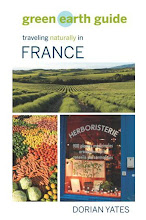
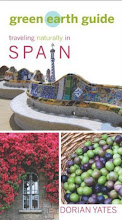
In both my books - Green Earth Guide Traveling Naturally in France and Green Earth Guide Traveling Naturally in Spain - as well as this blog, I have highlighted the cheap and wonderful city bike rental programs in Paris, Lyon, Montpellier, Nice, Nantes, Barcelona and Seville. Now I am happy to report that a successful launch of a similar program in Montreal, Canada called BIXI, is being launched in Boston, Massachusetts, Minneapolis, Minnesota and Melbourne, Australia in June. Later in the summer they hope to be operational in London, England.

BIXI operates very much like the other established city biking programs. You can pay for a day, a month or a one year subscription which entitles you to bicycle use for thirty minutes at a time for free or pay a nominal fee for additional time. For 24-hour passes you will need to pay a refundable $250 deposit. Due to the harsh winters in Montreal, BIXI bikes are available from May to November 24 hours a day, seven days a week.

The Web site gives details of bike station locations, safety and prices. Happy peddling!

Thursday, December 31, 2009

Green Travel Bags for the New Year


It is getting easier all the time to make environmental choices when purchasing items as companies get increasingly creative with incorporating recycled materials into their products. If you are in the market for green luggage and packs, you are in luck. Heys and Osprey are two such companies specializing in travel gear.

Heys, a Toronto based company, has been making innovative luggage for over twenty years. They have two green choices in their luggage line. The sturdy EcoOrbis rolling suitcases are made from 100% recycled ABS plastic. These come in four colors (red, black, lilac and beige) in three standard sizes and have 360º wheels and an aluminum handle. Their EcoTex line is made from recycled water bottles and includes duffle-style and accessory bags.

Heys International ships only in Canada. Heys USA ships to customers in the U.S. At Heys USA you can search by state to find stores that carry the Heys bags. In the U.S. EcoOrbis luggage is called EcoCase. The EcoCase is available in more colors and has a different embossed design on the exterior, but the bags like their Canadian counterparts are made out of 100% recycled ABS plastic.

Osprey packs, makers of excellent backpacks in all shapes and sizes, make a line of day-pack and accessory bags out of 100% recycled PET plastic. Their ReSource line uses recycled content in the mesh pockets, binding tape, webbing, buckles and zipper pulls in addition to the overall bag fabric with a commitment to using at least 70% recycled materials in the bags. This means that while the fabric is 100% recycled material, other components of the bags like the spacer mesh may only be 55% recycled material.

These bags made from recycled materials provide great options for the eco-traveler. We can hope that the future will bring  even more options for  ecological products and conscientious travel. Happy New Year.


Monday, December 14, 2009

Toilets and Traveling


I consider myself relatively easy going about toilets and bathroom facilities. That is I have gone backwoods camping and once lived with nothing more than an outhouse for almost four years. So it is not that I require luxury. However, when traveling I am amazed at the state of some toilettes.

I have gotten used to traveling with a package of tissues as I often come upon toilets without any toilet paper – and for that matter sometimes with no seat or even toilet! In some Italian, French and Spanish public toilets you will find the toilet paper in a common hallway, not in the stalls, and mere holes in the floor as toilets. These are not so bad as long as you have your squatting muscles in shape and have remembered to gather your toilet paper prior to entering your stall.

It is the urine saturated sticky floors, with used paper and towels stuck in various places, and unflushed toilets full of merde that send me in to winces and shivers. No one is caring for these bathrooms. 

So when I come upon toilets where you have to pay, and others are grumbling about the audacity of charging for urination, I am delighted to find clean, well-tended bathrooms. I would rather piss on the grass or by a tree anytime than go into the gross, urine and feces saturated cesspools that are often available.

In Spain most toilets are free, or free to customers. Do not be surprised, especially in southern areas, if you see people (admittedly usually men) peeing in the street, or by a dumpster or park tree. I would not recommend this since it only adds to the eau-de-pee often wafting from certain side streets.

I am told that in Paris this will get you a hefty fine. Fortunately in France you have a selection of toilettes - both free and fee. Many of the train station bathrooms charge .50 to 1 euro for entry. You can pay more for a shower if you are in need.

In London, many train stations charge for toilet use, but free ones can be found at most department stores and at the Covent Garden Market. 

Not surprisingly, Swiss bathrooms are notoriously clean. At the Zurich main train station you pay 2 Swiss francs for the toilets, but let me tell you it is worth it – you could perform surgery in those restrooms of gleaming marble. In Germany toilets also are generally very clean.

I am afraid that Italy does not share the same reputation as Switzerland and Germany, in fact quite the opposite. But look for fee-to-pee toilets at train stations, and also make sure you make use of the facilities at any cafe or museum you are patronizing.

In most European countries you can get by with asking for the toilette or WC. In Spain you will also see signs for Aseo. 

There are many helpful and funny links in cyberspace about bathrooms. A very comprehensive site is the Bathroom Diaries where you can search over 120 countries for bathroom locations and commentary - WOW! 

Visitors to Paris may want to part with 3 euros and download the Paris Pause Pipi Guide offering a useful guide to the public Sanisettes in Paris.There are also numerous links to Paris specific toilets with two especially good ones at Slow Travel and Colleen's Paris.

And for those who want to be prepared no matter what, you can try the new German invention Roadbag pocket urinal for men or the Ladybag  for women.

Saturday, December 12, 2009

Salt Caves For Natural Health


I find myself quite intrigued with the therapeutic qualities of salt caves. A simple, low-tech therapy (especially when done in natural caves), salt caves have been used in Eastern Europe and Russia for hundred of years for treating lung and nasal illnesses, particularly asthma and allergies., with antibacterial, anti-inflammatory and immune system modulating properties.  Research has found that sodium chloride (salt) especially when delivered with negative ions is beneficial for lungs and sinuses, dissolving thick mucus

Called Speleotherapy, cave therapy involves spending an hour or more in an underground natural salt or karst (limestone) cave where the combination of minerals and electronegative charge are particularly conducive to treating chronic and allergic respiratory conditions. People suffering from such ailments are recommended to have cave sessions every day for two to three weeks as part of a whole treatment plan.


Halotherapy does not involve angels as the name might imply, but is rather therapy in fabricated caves, using special technology that aerosolizes salt, mimicking natural salt caves. Halotherapy is becoming increasingly popular in the United States and Europe, where spas and clinics are installing fabricated salt caves to be used for allergy and asthma sufferers, as well as for relaxation and preventative care. 

Natural Caves include the Bystrianska cave in Banská Bystrica, Slovakia; Tel: +421-48-413 53 12; Email: sdluholucky@nspbb.sk AND vrajcanova@dfnbb.sk; Web: http://www.speleoterapia.sk/indexe.htm; AND http://www.visitslovakia.com/bystrianska-cave


The Underground Rehabilitation and Treatment Centre is an independent healthcare facility that is part of the Wieliczka Salt Mine Tourist Route (Kopalnia Soli Wieliczka – Trasa Tusrystyczna) in Poland. Quite an impressive facility, the salt mines have been used for therapeutic purposes for hundreds of years. Today the Treatment Centre is a full on treatment and research facility, providing respiratory rehabilitation 440 feet below ground. 


There are overnight treatments as well as day treatments with nearby hotels for day users. Medical consults and diagnostic tests are part of the program as are exercises and other activities. Daily sessions last six and a half hours in the mine, and fourteen-day stays are standard, with seven-day health packages offered as well. The Wieliczka Salt Mine Underground Rehabilitation and Treatment Centre, 32-020 Wieliczka, Park Kingi 6; Tel. +48 12 278 73 68; Email: sanatorium@kopalnia.pl; Web: www.sanatorium.kopalnia.pl


Fabricated Salt Therapy “Caves”: 


You can find Halotherapy salt caves in Rutland, VT, Williamsburg, VA, Illinois, Florida, and other locations in the United States, as well as in London and Lincolnshire, UK. Dr. Margaret Smiechowski, a native of Poland, has brought her knowledge of salt caves to the United States where she is considered an expert in salt therapy installations. For more information about her work see http://www.saltcavevt.com or visit the website of the Pyramid Holistic Wellness Center in Rutland Vermont.


In London, a newly fabricated salt cave has opened in a renovated church. Allergy & Asthma Ltd opened the cave to offer natural treatments for allergies and maladies of the lungs. Salt cave sessions are available by appointment only. Allergy & Asthma Ltd., 320B, Earlsfield Road, United Reformed Church, London, SW18 3EJ; Tel: 020 8870 6006; E-mail: info@saltcave.co.uk; Web: http://www.saltcave.co.uk; open Monday to Friday from 8:30am to 8:00 pm, Saturday from 9:00am to 5:30 pm.


Indium is a company in Estonia that manufactures salt rooms and individual salt “cocoons” – sort of like saunas but rather than heat you are getting aerosolized salt therapy. Indium Top LLC, Paldiski Road 68, Tallinn, 10617 Estonia; Tel: +372 6715 774; Email: iiris@salt-therapy.eu; Web: http://www.salt-therapy.eu 

Friday, December 11, 2009

Stargazing in Scotland


For those of us that have joy-filled memories of lying on our backs in a meadow gazing up at the heavens being amazed and overwhelmed by the vastness of the universe and the infinite number of stars shining down on us, you will appreciate the efforts of the International Dark Sky Association.

The Association has a program where it approves Dark Sky Parks - places where visitors can see the vast starlit night without interference from the copious light pollution that limits stargazing in densely populated parts of the world. Currently there are only four such parks in the world. There are of course plenty of wilderness areas and huge tracks of sparsely inhabited parts of the world where stargazing is possible. The Dark Sky Association is recognizing national parks or areas that make huge efforts to create a dark sky area.

The International Dark Sky Association not only promotes observing the night sky, but also works as an advocacy organization to raise awareness about the hazards of over-lighting, and working to reduce light pollution around the world. At the Dark Sky website you can find information about the best stargazing destinations as well as practical information about lighting fixtures that minimize light pollution – information you will hopefully share with your town and city officials.

For stargazing travelers, you can find three official Dark Sky Parks in the United States in Utah, and somewhat surprisingly in Pennsylvania and Ohio. 

The latest approved Dark Sky Park is in the southwest corner of Scotland, the first of its kind in Britain, located in the Galloway Forest Park. The park covers almost 200,000 acres with special roads for stargazers - most access is by foot, bikes and horses. Galloway claims there are 7000 visible stars as well as the Milky Way so on a clear night you will have plenty to observe. You can view specific information about the park’s dark sky program at their Web site. Based in Edinburgh, Scotland's own dark sky organization, Dark Sky Scotland, offers astronomy events,  a free downloadable beginners guide to astronomy, and community workshops.

Galloway Forest Park's general Web site offers downloadable guides to their events and twenty-seven walking trails, as well as information about canoeing, biking, and other activities. To reach the park, you can use the VERY useful Traveline Scotland Web site where you can plan your trip throughout Scotland using public transportation. I wish every country had such a service! 


Happy stargazing wherever you are, but certainly if you find yourself in this corner of Scotland - I wish for you many shooting stars.


Photo from NASA archive


Thursday, March 6, 2008

London and Whole Foods


I did London in a brief burst. Decades ago good food was scarce in London, but now it is full of natural foods stores and restaurants, as well as fast-food convenience stores selling decent food for on the go. These chains include EAT and Pret a Manger.
The Fresh and Wild health food stores are beautiful and full of great food. This line of stores was bought a couple of years ago by the U.S. Whole Foods. While the original Fresh and Wild stores remain, Whole Foods renovated an old landmark building, Barkers, on Kensington High Street, and built their flagship store, which puts their U.S. stores to shame. A gigantic store, Whole Foods has 80,000 square feet of natural and organic foods taking up three floors. It offers a variety of over seven different food court options, and sells fair trade and organic clothing, bed linens and gifts. The food part of the store is divided into regular groceries, plus gourmet sections for cheese, wine and other delicacies. They also offer health therapies including massage. The store is easily accessible by Tube – just a block from the High Street Kensington stop, and they also offer delivery services using their groovy-fueled motorbikes.
Whole Foods, Barkers Building, 63-97 Kensington High St, London; www.wholefoodsmarket.com/uk/ ; Open Monday-Saturday: 8am -10pm, and Sundays 12-6. The four former Fresh and Wild store locations can be found at the Whole Foods website.
For travelers feeling desperate for natural food in the Piccadilly Circus area, take heart – a Fresh and Wild is hidden on Brewer Street just behind the north side of Piccadilly Circus with prepared foods and gluten free options.
The Queen’s walk on the south side of the Thames is a great strolling promenade – very busy on nice weekend days. Both the National Theater and Shakespeare’s Globe are along this route, as well as numerous shops and sites. Under Waterloo Bridge you will find a used book market full of old and new titles for reasonable prices open daily. Street musicians are plentiful and talented along this promenade.
A note on London Theater – while the regular, Broadway-like theater productions are expensive, you can find excellent theater for great prices at the National and Globe theaters. The Globe only has productions in the warmer months since they are an outdoor venue, but the National goes year-round. I bought standing room tickets for 5£ each (about $10/ticket) for a wonderful production of George Bernard Shaw’s Major Barbara.
Bus stops and subway stations (the Tube) are everywhere, so between public transport and walking you can get around just fine - in fact a car would be a hindrance in London – the traffic is horrid, parking scarce to none and there is now a fairly hefty congestion-fee for driving in central London. Harry Potter fans will understand when I say that London bus drivers perform very closely to the night-bus drivers portrayed in the books. That said, it is great fun to travel on the double-decker buses and the views from the upper deck are excellent. Check out the day-pass for public transport – good value and so much easier than having to buy tickets each time you hop on a bus or train. French and London bus drivers may go to the same training school. A helpful bookstore employee told me that the Tube employees are trained to be knowledgeable about London and be able to answer questions, but not the bus drivers – she said not to bother to ask them anything. That was a good heads-up, but little did I realize that I would be barked at! One cranky London bus driver called me a “stupid cow” as I was trying unsuccessfully to exit the rear door of the bus (now the French were not helpful, but they did not sling insults).
One word of advice – leave enough time to travel throughout the city. The Tube maps can be deceptive as to how long it takes to travel between stops, especially when venturing out to areas beyond the heart of the city.
For possibly the cheapest prices in London you can explore the Queen’s Market on Saturday mornings by the Upton Park Tube station (takes about 40 minutes from central London). This is in the West Ham area of East London, a block from the West Ham football (soccer) stadium. It offers a good view of the non-tourist side of London – the streets are litter-strewn, and the items at the market vary from foods to electronics to a variety of clothing including saris and shimmering dresses.
London is an awesome city. The exchange rate makes it very expensive (about $2 per 1£ – so double the price of everything- ouch!) The Earl’s Court Hostel is a great accommodation located in the fairly swank South Kensington residential area. It is part of the Hostelling International Network. Prices are exceptional for the middle of London and the hostel is clean, newly renovated, and has internet access for a fee on their computers and wifi throughout if you have your own computer. London Earl’s Court Hostel, 38 Bolton Gardens, Tel: 44 207 3737083; earlscourt@yha.org.uk; www.yha.org.uk. Prices starting at 22£/night per person.
There are countless eating options in London – even the late night convenience stores sell organic foods. I was able to get organic cheeses and bread, as well as wheat-free options and organic ice cream for a friend. So while expensive, London is a great city for traveling green and naturally.