Showing posts with label Barcelona. Show all posts

Friday, February 25, 2011

Olive oil: an olive oil lover's guide to the organic oils of spain

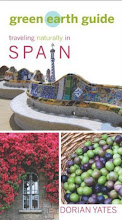
The new Green Earth Guide to the organic olive oils of Spain is now available on Amazon!

Olive Oil: An Olive Oil Lover’s Guide to the Organic Oils of Spain
is for any connoisseur or lover of olive oils. Passionate about olive oil, Dorian Yates, author of the award-winning Green Earth Guide series to traveling naturally and ecologically in Europe takes you on a tour of the abundant, fresh olive oils produced organically in Spain. Olive Oil includes historical and cultural information, growing and processing techniques, as well as full listings of over forty oils. Her mouth-watering guide to Spain’s organic olive oils makes you want to break out the dipping bread and start tasting.

Buy the book and start tasting the over forty delicious oils listed in the Guide. Some of them are available in the United States, others you will have to travel to Spain to enjoy.

Monday, January 10, 2011

Slow Food Spain

Last week, "alive" food. This week slow….. and not as in eating snails (even though that is the Slow Food logo) and sloths, but rather, slow as in the promotion of whole food meals prepared fresh from local and seasonal foods.

In Spain, the Slow Food Farm-to-Table project, called Km 0, certifies restaurants serving local, organic and indigenous foods that have come from farms less than 100 km (62 miles) away. Close to sixty restaurants around Spain have been recognized as Km 0. The highest concentration of Km 0 restaurants are in the Catalonia and Basque regions. The rest are scattered around the country. A couple are listed specifically in the Green Earth Guide to Spain—Kimpira in Valencia and Gaia in Sevilla.

Founded in Italy twenty-two years ago, the Slow Food movement mission is five-fold—to defend food biodiversity, safeguard the environment, advocate sustainable agriculture, protect small producers and their communities, and foster the gastronomic traditions of the world. Within that broad purpose, Slow Food has many projects including Farm to Table/Km 0 and the Ark of Taste. For restaurants in Spain to be accepted in the Km 0 program they must serve at least 5 dishes on their menu made avoiding GMO foods and with a minimum of 40% ingredients from local producers and 60% from foods that are organic or identified in the Ark of Taste project. The Slow Food Foundation for Biodiversity Ark of Taste project catalogs and promotes indigenous foods at risk of extinction. More than 900 foods from fifty countries have been identified so far. In Spain this includes seventy-nine foods—some olive oils, olives, fruits, vegetables, herbs, cheeses, meat, fish, grains and wines. Restaurants are reviewed annually to make sure they are maintaining compliance with the Km 0 requirements.

Thanks to Slow Food España for administrating the Km 0 project and for providing the list of Km 0 participating restaurants. To find the Spanish restaurants approved as Km 0 visit the new 2010-2011 list of restaurants, organized alphabetically by city:
http://cocineros.slowfood.es/2010/12/09/restaurantes-km-0-edicion-2010-2011/

Thursday, April 29, 2010

Organic Moon Beer in Spain

While you can find some micro-brewed beer in Spain it is not as abundant as in some other countries, wine being the historical abundant and local alcoholic beverage. But lovers of finely crafted small batch beer will be happy to know that about half-way between the cities of Valencia and Alicante the Articultura Land Cooperative makes special certified organic beer. The Cooperative, located in Agullent, Spain, grew out of a three-fold desire to produce local products crafted with care, employ organic and sustainable land management practices, and generate income with social and environmental responsibility.

The coop produces two organic wines - one a Monastrell, the other Mersequera - as well three different beers. The Lluna (Moon in Valenciano) brand of organic artisanal beer (cervesa artesana ecologica) includes Cervesa Lluna, a golden light beer, Cervesa Lluna Bruna, a brown ale and Cervesa Lluna Negra a dark stout beer.

The beers are sold at certain natural foods restaurants and stores mostly in the Alicante and Valencia areas as well as in a few spots in Barcelona, and only two in Madrid.

In Valencia, one of my favorite restaurants, Kimpira, serves the Lluna beers. Kimpira makes delicious vegan and macrobiotic meals. Their offerings are not regular macrobiotic or vegan fare, but rather beautifully presented gourmet food. You can also find the Lluna beers (appropriately given the name) at La Lluna restaurant and you can hope they are serving their unusual and delicious torta de zanahoria (carrot cake). Health food stores selling Lluna include my favorite Ecorganic ecomercat as well as the Angel Biomercado. If you are in the Girona and Costa Brava area you can find them at my favorite Nana Biosupermercats. Barcelona visitors have to travel farther afield out of the old part of the city for stores offering Lluna beers. See the web site for all store locations under On trober-la.


Salud!

Wednesday, March 17, 2010

Cheap Bike Rental Programs Going Global!

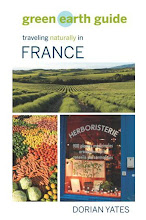
In both my books - Green Earth Guide Traveling Naturally in France and Green Earth Guide Traveling Naturally in Spain - as well as this blog, I have highlighted the cheap and wonderful city bike rental programs in Paris, Lyon, Montpellier, Nice, Nantes, Barcelona and Seville. Now I am happy to report that a successful launch of a similar program in Montreal, Canada called BIXI, is being launched in Boston, Massachusetts, Minneapolis, Minnesota and Melbourne, Australia in June. Later in the summer they hope to be operational in London, England.

BIXI operates very much like the other established city biking programs. You can pay for a day, a month or a one year subscription which entitles you to bicycle use for thirty minutes at a time for free or pay a nominal fee for additional time. For 24-hour passes you will need to pay a refundable $250 deposit. Due to the harsh winters in Montreal, BIXI bikes are available from May to November 24 hours a day, seven days a week.

The Web site gives details of bike station locations, safety and prices. Happy peddling!

Wednesday, February 10, 2010

In and Out of Barcelona By Train

Barcelona and Madrid are the two main train and plane hubs in Spain. I have found myself living on either side of Barcelona the last two winters and so have used the Barcelona trains extensively. Below are a few tricks and tips I have learned that should be useful to travelers entering or leaving Barcelona by train. 

There are two train stations in Barcelona -  Estacio de Franca in Catalan (de Francia in Spanish) and Estacio Sants. Sants is the newer station with most of the train traffic including the high speed AVE.
Franca is the old station with marble floors and a grand feeling although much smaller than Sants and with fewer tracks. The overnight trains to Paris, Zurich and Milan leave from Franca. Franca has no stores or services to speak of except ticket windows, an information desk and rest rooms.

The bathrooms have been renovated since I wrote the Green Earth Guide: Traveling Naturally in Spain and now do have toilet paper and toilet seats, but take note and get your toilet paper on the way in as it is only in the entry of the bathroom, not in the stalls.  The sinks are automated all-in-one wash and dry and the stalls now don bright pink doors. 

If you have to wait or have a layover at Franca be prepared with food especially if you have luggage, as there is nothing to eat in the station- not even a newsstand - so be prepared with reading material as well. There used to be a large café/bar at one end of the station but that is closed for renovation with no indication of when it will reopen. The left luggage (consigna) has been closed for years at Franca due to security issues. 

The station is covered but open air, so while lovely in the warmer months, it can be chilly in the winter. In the evening the one heated room is where the information area is with seven or so comfortable chairs, usually filled with travelers waiting for the overnight trains to Europe which leave between 7:00 and 9:00pm.

In stark contrast the Barcelona Sants station is a new large complex complete with shops and food options, and a metro accessible from within the station. If you have luggage you don’t want to lug around, you can leave it at the Consigna (Left-Luggage) lockers at Sants. 

There is a convenient train that runs between the two stations for 1.40 (at writing time). You need to buy a specific ticket at one of the machines for the Rodalies (commuter) trains. The trip only takes twelve minutes between the stations and is definitely the fastest, easiest and cheapest means between the two. The trains run regularly - every fifteen minutes or so. 

To buy your tickets from Sants TO Franca - go to the machines down by tracks 13-14 in the Sants station. At the machine you can choose your language and then must search for your destination (Barcelona de Franca) which will be on the second page of options. At Sants you enter the tracks with your ticket via a turnstile much like the metro so it both gains you entry and validates the ticket.

At Franca there is a machine to the right of the ticket counter near to the security checkpoint. The same thing holds true here – buying your ticket from Franca TO Sants you will have to click on the yellow “other destinations” button to find Barcelona Sants in the middle of the second page of destination options. At Franca you MUST validate your ticket in one of the machines in the hallway where security is prior to boarding the train AND you will need your ticket to exit at Sants so hold onto it. 

If you have a lot of time between trains and are not too encumbered by luggage you can take the metro to the old part of the city and stroll through the streets and up Las Ramblas stopping to have a meal or snack. The fresh squeezed fruit juices at La Boqueria market are especially refreshing for travelers. If you are starting at Franca, I would take the metro one stop to Jaume 1 and then wind my way over to Las Ramblas through the back streets. From Sants, if you don’t want to bother switching metro lines, take the green line L3 to Liceu which will let you out right on Las Ramblas.

For more information about the overnight train see the post Dinner in Paris, Breakfast in Barcelona.

Thursday, January 21, 2010

Always on the Hunt for Good Bread - Success in Valencia Spain!

While I have found some wonderful bakeries making traditional and artisanal breads in Paris, Barcelona, Barcelona again and Madrid (see posts), I had yet to find any such bread makers in Valencia.

While Valencia is dotted with bakeries, it suffers as does the rest of Spain from a shortage of what I would categorize as really good bread. Happily I discovered serendipitously a bakery just off the Plaza de la Reina that makes a large variety of artesano breads and pastries. Among their offerings are a Pan de Gallego made from wheat (trigo in Spanish) grown in Galicia, the region in northwestern Spain, and Espelta Ecologico made from organic spelt.

One friend of mine who is a bit of a bread connoisseur said after sampling the PanPan Gallego baguette, “Wow I haven’t had bread like that since……well, since I was in Paris.” Tall praise for PanPan. The counters overflowing with breads can be accessed all day during the week and on Saturday mornings, and PanPan could not be more convenient as it is right around the corner from the Plaza. PanPan Atelier, La Paz 1, 46003 Valencia; www.panpan.es; open Monday to Friday from 8:00 am to 9:00 pm, Saturday from 9:00 am to 2:00 pm.

Monday, January 18, 2010

More Unusual & Green Accommodations in Spain


To celebrate the upcoming release of the Green Earth Guide: Traveling Naturally in Spain, I am posting here some fantastic accommodations that I learned about after completing the book - thank goodness for blogs and web sites!


The InOut Hostel in Barcelona is part of the Hostelling International network of worldwide hostels, but it is unique in that it is established as a nonprofit organization whose workforce is comprised almost entirely of people (96%) with disabilities including Down’s Syndrome. 

Located about fifteen minutes from the heart of Barcelona, InOut Hostel sits on almost sixty acres in the Collserola Park. The hostel is large, clean and airy with more than 150 beds and a restaurant serving fresh foods. The hostel is handicap accessible and offers terraces, lawns, and footpaths through the park. InOut Hostel, Major del Rectoret, 2, 08017 Barcelona; Tel: 932 800 985; Email: info@inoutalberg.com; Web: www.inoutalberg.com; Metro: FGC S1 or S2 to Baixador de Vallvidrera. 

Available from the beginning of May to the end of September, you can stay at the mountain retreat of Molino Taponero where you will find a cottage sleeping up to four people and a house sleeping up to six people nestled in the Andalucian mountains by a river - a former water mill - near the town of Gaucin and forty minutes from the famous white village of Ronda. The houses are rented by the week for £480 per week for the house and  £380 per week for the cottage - or equivalent in Euros. Owners Dawn and Paul Sutcliffe are weavers and produce natural fiber shawls and blankets in the winter months. Molino Taponero, Gaucin, Andalucia; Email: ptsutcliffe@yahoo.com.

Nearby the Molino Taponero you can find the solar-powered Andalucia Yurts. Here you will find two locally crafted yurts which sleep 4-5 people and a double-guest-room on the side of the main house. There are indoor and outdoor showers - the outdoor has riverstones on the floor and eucalytus wood walls. Natural health services are offered and they have a wood-fired sauna by the river. You can stay for 35 euros/night and have dinner for 20 euros per person.  Andalucia Yurts, La Huerta, Gaucin, Andalucia; Tel: 952 117 486 (evenings & weekends) or cell: 686 888 409; Email: Kit and Penny Hogg at hoggs@vsatmail.com.

Nearby is a WAY cool yurt making company, Baltasar Bent Yurts, which makes handcrafted yurts from chestnut wood. They say, “We make the wooden elements of our yurts using traditional hand tools and sew the canvas using sustainable solar power where possible. All the poles are cut, stripped, sanded and oiled by hand - the result is a yurt with no hard edges - all in all a magical, organic, beautiful space.” 

For a further variety of eco-accommodations in Spain check out the wonderful Organic Holidays Web site developed by Linda Moss, author of Organic Places To Stay UK & Ireland.


Lucky you if you get to stay in any of these wonderful places….

Tuesday, December 29, 2009

Dinner in Paris, Breakfast in Barcelona


I have very fond memories of traveling by train as a child, especially overnight trains. White linen tablecloths with china and glassware in the dining cars, and “club cars” where I invariably met other children to play cards with or I-Spy as we stared out of the windows. My memories do not include gross bathrooms splattered with urine, nor miniscule compartments too small for luggage. Since I was smaller then it may be that indeed the compartments were tiny and I just didn’t notice, but I do believe the bathrooms were much cleaner. 

Train travel is still my preferred form of transport, although I will admit to being disappointed on many trains since I hold a high standard from my youth. Certainly a pet peeve of mine is the condition and lack of toilets, especially on overnight trains. Why are they gross now and not forty years ago? People frequented them just as much I am sure.

That said I am happy to report that the overnight train between Paris and Barcelona (and Madrid) is still alive and busy even with dirt-cheap flights available on low-cost airlines. I suspect that if you can afford to travel in Grand Class or First class that the compartment size and toilet facilities are better than those in tourist class.

A word of warning, if you are traveling in tourist class you will be four people to a “room”, which is the size of a large closet. Whoever designed these train cars forgot that people traveling twelve hours or more between major cities might be accompanied with large luggage. There is no luggage storage in the “rooms” or on the train car, so the four people must navigate around the luggage that takes up what limited space there is between the fold-down beds. The toilets are abysmal and inevitably at least one ends up unusable - flooded or plugged.

You might think that these complaints would make it so that I would never travel by overnight train. Not so. I still love the train the best, but simply pine for a slightly more comfortable experience. 

The Paris Barcelona route (there is a separate Paris-Madrid route) runs every night, and the timing of it is such that you can have dinner in Paris, albeit a not too late dinner, and breakfast in Barcelona. I did just that, having gone to Paris for the weekend. I had an early dinner at a favorite organic foods restaurant in the St. Germain area of Paris consisting of a wonderful salad, and then rosemary roasted organic chicken leg with vegetables. Fortunately the Phtyo-Bar is open every day from noon to 11:30 pm so it doesn’t matter what day you are traveling. My meal was followed by a lovely stroll along the Seine and by Notre Dame, then onto the Metro to take me to Gare Paris-Austerlitz for the 8:30 pm (20:30) train to Barcelona. Gare Austerlitz is not far from the Paris Grand Mosque and that is a wonderful place to have tea.

For novices to overnight train travel, you may be surprised when the steward asks you to hand over not only your ticket but also your passport or residence card - this is to avoid having to wake everyone up at 5 am for the border check. As unnerving as it is to hand over your most significant form of identification, everyone does it and there never seems to be a problem.

The train arrives at Barcelona Estacio de Franca at 8:24 am - or close to then. If Barcelona is merely a layover you will likely have to make your way to the other train station in Barcelona, Estacio Sants -- this can be done by train or metro (metro stop is the yellow line Barceloneta around the corner from the train station -take one stop to Jaume 1 for the old part).

In any case, if you are eager for breakfast you can walk or take the metro to the old part of Barcelona - El Raval and Barri Gotic areas. Stroll through La Boqueria market and pick up some delicious fresh pressed fruit juice - there is a wide variety to choose from: Kiwi, Coconut, Mango (my favorite), orange, strawberry, and more.

There are any number of cafes and restaurants to eat at near or along Las Ramblas. A fun and airy restaurant with outdoor seating just one block west of Las Ramblas, north of La Boqueria is Bar Lobo. Here you can order organic coffee or tea, fresh fruit, juices and  smoothies, as well as the “Jane Fonda” breakfast (yogurt, muesli, fruit and organic tea), the “Churchill” (bacon, eggs & café con leche (coffee with milk)), or little sandwiches made on baguette bread. The restaurant has the feel of a loft and much of the food prep is done in the center so visible to all patrons. Bar Lobo, c/ Xucla 8 (on the corner of c/ Pintor Fortuny), Barcelona; open Monday to Saturday from 9:00 am to 6:00 pm.

If you are not in the mood for a full on breakfast you can walk three blocks west on Pintor Fortuny and then up the street Doctor Dou to the Reykjavik Bakery - see Searching for Good Breads post. If you want non-bakery goods you can cross the street and find one of the Veritas natural food stores with produce and other groceries. Barcelona Reykjavik Bakery, Doctor Dou, 12 (Raval), open Monday to Saturday 10:00 am to 9:30 pm.

If you are indeed continuing on to Estacio Sants you can pick up the green line metro at Liceu (no switching) on Las Ramblas or the red line at Plaza Catalunya (you will need to switch at Espanya for the green line).

And enjoy being able to have dinner in Paris and breakfast in Barcelona!
Bon appetit, ¡buen apetito!


A Las Ramblas note: If you take pictures of any of the Living Statues along Las Ramblas please leave money in their containers - this is how they earn their living and some will chase you down if you don’t.

Friday, November 6, 2009

Another Delicious Bread Source in Barcelona


Another bakery “heard” from – that is from fans – so we add Crusto to our list of delicious Barcelona breads and baked goods.  Open for just over a year, Crusto has been delighting bread oficianados in Barcelona with their fifteen yummy bread choices. Their Web page is new and minimal, but if you use Facebook you can find their fan page at Crusto.

You will find the Crusto bakery one block up from the major street of C/ Arago, about equidistant from the metro stops Diagonal and Passeig de Gracia. Crusto, c/ Valencia, 246, 08007 Barcelona: Tel: 934 870 551; Email: clients@crusto.es; Web: http://www.crusto.es; open Monday to Saturday from 8:00 am to 9:00 pm, Sunday from 9:00 am to 2:00 pm.

Thursday, November 5, 2009

Searching for Good Bread in Barcelona


I have two high school friends living in Barcelona – one has lived there for years, the other is spending a sabbatical year there. On a recent visit we were discussing the abundance of wonderful food in Spain. My friend on sabbatical, who regularly lives in the United States in a region rich with artisanal breads, commented on how while so much of the food in Spain was fantastic, how disappointed he was with the bread in Spain. Given that I have had to regrettably give up gluten, I was not aware of the dearth of truly hand-made delicious bread in Spain. By appearances it would seem that Spain was rich in fresh-baked goods. This is true to the unsuspecting eye and traveler, but apparently much of what one sees as fresh baked local bread (and other baked goods) are in fact pre-prepared in industrial lots either partially baked and frozen, or as dough to be fully baked on site, made with industrial fast-rising yeasts and additives in factories to be distributed around the country.

Ahh, we had a mission! To find truly fresh local bread, made on site in local bakeries with slow leavening which enhances the enzymes, aroma, and taste of bread. We focused our sights on Barcelona since that is where two out of three of us are living. Happily we found that there are indeed numerous bakeries still churning out baked goods hand crafted on their premises. Listed here are just a few of the many with four of the six listed here using organic ingredients in some or all of their products.  All are delicious – you can do a taste testing tour and decide which are your personal favorites.

The Barcelona Reykjavik Bakery uses old variety grains such as spelt and kamut, as well as rice, corn, rye and oats – all organic, and all grown in Spain. The spelt flour comes from Asturias. They make a variety of breads and pastries – some plain, some unusually flavored. They also offer vegan and “low-gluten” and gluten-free options. Barcelona Reykjavik also does not use industrial yeast, but rather a starter as their leavening made from corn, peas, spelt and honey. Barcelona Reykjavik has two store locations both lined with gleaming white tiles. The store in the Raval area is four blocks west of La Rambla, and a couple of blocks north of La Boqueria market. The Gracia store is easily reached, one block from the Metro Fontana. Be prepared to pay for this delicious well made bread –some loaves are 8 euros. Both stores are open from Monday to Saturday 10:00 am to 9:30 pm. Barcelona Reykjavik Bakery, Doctor Dou, 12 (Raval), and Asturies 20, (Gracia), Barcelona; Tel: 933 020 921; E-mail: bcnrvk@bcnrvk.cat; Web: http://www.barcelonareykjavik.com (in Spanish, Catalan and English)

The Mistral Bakery has been housed by the University Plaza since 1879 and makes a range of breads and pastries in its wood-fired oven including certified organic breads. Mistral Bakery (Forn Mistral), Ronda Sant Antoni, 96 and around the corner at c/ Torres i Amat 7, Barcelona; Tel.: 93 301 80 37; Email: info@fornmistral.com; Web: http://www.fornmistral.com; Metro: Universitat; open Monday to Saturday from 7:30 am to 9:00 pm.

The one hundred year old bakery, Forn Fortino, uses their original wood-fired oven to bake their wide variety of breads by third generation family bakers. They make traditional breads and pastries as well as options with organic flour, and some without wheat or sugar. The closest metro stop is Fontana about seven blocks away. Forn Fortino, Travessera de Gracia 145, Barcelona; Tel: 932 373 873; Email: forn@fornfortino.com; Web: http://fornfortino.com; open Monday to Friday from 6:30 am to 2:00pm/5:00 to 8:45 pm, Saturday from 6:30 am to 2:30 pm.

Born into a family of bakers, Xavier Barriga has been baking since he was fourteen and wanted to perfect his art making artisanal breads using natural leavening and quality ingredients. He founded Turris, rated as the best bakery in Barcelona by Barcelona Time-Out Magazine. Be prepared to wait in line for ten to twenty minutes to buy your baked goods, and expect to pay for quality -- do not go in with just a euro or two to spend – have at least ten euros in your pocket. Turris is four blocks from the Diagonal Metro stop. Turris, c/ Aribau 158, 08036 Barcelona; Tel: 932 179 606; Email: turris@turris.es; Web: http://www.turris.es (in Spanish and Catalan)

Founded in 1953, the third-generation bakers at Forn d’en Pere make reasonably priced (2 euro/loaf) artisan bread with their own recipes offering fifty varieties of breads many with whole grains and seeds. Forn d’en Pere, Saints 326, 08028 Barcelona; Tel: 934 401 436; open Monday to Saturday from 6:00 am to 2:30 pm/ 5:00 to 8:30 pm.

Baluard is a bakery in the Barceloneta section of Barcelona making bread and pastries in the French-style with fresh baguettes, croissants, and whole grain varieties. Located a few blocks from the Barceloneta metro stop, by the beach and the Mercat Barceloneta (Market). Baluard, Calle Baluard, 38, Barceloneta, Barcelona; Tel: 932 211 208; open Monday to Saturday from 8:00 am to 9:00 pm.

Monday, November 2, 2009

Halloween in Spain


As you might guess, Halloween is not a traditional Spanish holiday and has only started to be celebrated in the past few years. It differs wildly from Halloween in the United States. For starters, there are not gargantuan bags of candies being sold in stores as trick-or-treating is not part of the holiday in Spain. The focus is on costumes, making noise, partying and being with other people – the basic recipe for most festivities in Spain. Many clubs and bars will feature special Halloween events, people have private parties and some stores will offer special treats for customers. Street strolling and goggling is the most common activity.

Plazas can be packed with people, so if you are crowd phobic, Halloween may not be the best night for late night wandering – and late it is as people start to go home between 2:00 and 5:00 am. The traffic photo here was taken at 2:30am on Halloween “night” – imagine sound effects as well with shouting, honking and music. This is the busiest this particular street sees at any time of day.

Needless to the say, the day after makes for some pretty smelly and dirty streets as all sorts of bodily fluids are “shared” with the pavement, as well as discarded party remnants, as you will see in the photos.

If you love to dress-up and party, then Halloween in Spain is for you. If not, make sure you have ear-plugs in your suitcase.

Monday, October 19, 2009

Segway Touring in Spain


Segways, the brain child of New Hampshire’s Dean Kamen, are two-wheeled, electric vehicles that you steer and maneuver with your body’s weight and balance. With three-speeds, the Segway can go a maximum of 10-12 miles an hour, making it quite ideal for city touring.  Segways have been adopted in many European cities as a clean, energy efficient and fun touring option. Some companies merely rent the Segways, others offer tour groups with all participants riding Segways. Most rental and touring companies require users to partake in a 15-30 minute Segway training prior to use.

Please check each Web site for specifics as they vary per company. Most have a weight range of 100-220 pounds per person and some ask riders to be at least 15-18 years of age. Duration of tour or rental and price vary as well from one to three hours and from 35 to 60 Euros. Some companies will offer special theme tours outside of the cities like in natural parks and vineyard touring.


Segway Renting and Tour Companies in Spain include the following:

Madrid, Leon, Oviedo and Santander: http://www.citysegway.es/english_index.htm
Madrid: http://www.madsegs.com
and Bicycle and Segway rentals: http://www.urbanmovil.com
Barcelona: http://www.barcelonasegwayfun.com/home.htm
and http://www.barcelonasegwayglides.com
Girona: http://www.sobrerodes.cat/homesbrs.html
and http://www.segwaytours.cat/en_index.php
Valencia & Castellon: http://www.segwayvalencia.com
and Bicycle and Segway rentals & tours in Valencia: http://www.valenciabikes.com/es/segway-tours
Malaga: http://www.segwaymalagatours.com

Thursday, October 15, 2009

Never Enough Books and Art Supplies!

Well I can’t help myself – I seem to gravitate to art supplies and books. I have found some more stores in my wanderings in Valencia, as well as two magnificent bookstores specializing in travel in Barcelona and Madrid.

Tot en Art Bellas Artes, tucked in the northern part of the historic El Carmen district in Valencia, is a full service art store. They offer lists of art workshops all over Spain on their web site under “Talleres”, as well as an alphabetical directory of artists. Tot en Art, c/ Corona 35-B, 46003 Valencia; 963 917 265;  www.totenart.com

Yet another art supply store in Valencia is close to the train station and the more upscale shopping area of Colon. Civera is on a side street and is a large, well-stocked store. Civera Bellas Artes, c/Pascual y Genis 24, Valencia, open Monday to Friday only from 9:00am to 1:30pm/4:00 to 8:00pm.

Similar to Auralia (mentioned in an earlier post), Astral is a lovely specialty bookstore offering movies and books about most things alternative – health, energy, gardening, food, spirit, as well as selling a small selection of gems, flower essences, and essential oils. Most of their selections are in Spanish, but you can find English titles hidden in amongst the volumes, and welcoming, helpful storekeepers. So helpful in fact that when I told them I wrote about traveling ecologically and used an example of where to find organic food, I was given a box full of organic “kakis” (persimmons) which were delicious! Located down the street from the Quart Towers (Torres de Quart). Astral, c/ Quart 52, 46001 Valencia; 963 922 057; open Tuesday to Saturday from 10:00 am to 1:30 pm/ 5:00 to 8:00 pm, Monday from 10:00 to 1:30pm.

If you are on the hunt for English books in Barcelona you can go to Come In ~ Libreria Anglesa (English Bookstore) a couple a blocks form the Diagonal metro stop where most things are English. Come In ~ Libreria Anglesa, c/ Balmes 129, 08008 Barcelona; Tel: 934 531 204; Web: http://www.libreriainglesa.com/cat/index.php

You will find the excellent Altair travel bookstores online, as well as one live store in Madrid and one in Barcelona. While the website is only available in Castilian or Catalan, they sell books in English and other languages as well, with a truly outstanding assortment of guidebooks, travel literature, maps, arts and culture, adventure travel, anthropology and, not surprisingly, the most extensive selection of books about every area of Spain. The store in Madrid is in the more residential area not far from the Casa del Campo park and can be reached by the Arguelles metro stop. Altair, Gaztambide 31, 28015 Madrid; Tel: 915 435 300; open Monday to Friday from 10:00 am to 2:00pm/ 4:30 to 8:30 pm, Saturdays 10:30 to 2:30. In Barcelona, Altair is on the Gran Via, just over a block from the Plaza de Catalunya so you can reach it by the Catalunya or Passeig de Gracia metro stops. Altair, Gran Via 616, 08007 Barcelona; Tel: 933 427 171; open Monday to Saturday from 10:00 am to 8:30 pm; Email: altair@altair.es; Web: www.altair.es

Wednesday, October 7, 2009

Recycling and Reusing in Spain – Second hand and more


Recycling containers are dotted throughout Spanish cities and towns, sometimes next to the garbage dumpsters and sometimes separate. In some fancier communities you will find extensive options for recycling including the pictured receptacle for small items like batteries, cds, light bulbs and ink cartridges.

If you are looking for used items and are not quite up to dumpster diving – or the dumpsters are not providing what you want- there are stores and markets selling used items. Happy hunting!

In the Barcelona suburb of Sant Cugat you can find a variety of antique, used and flea vendors and a full on market the first Sunday of every month. The roughly eighty permanent stalls of the Mercantic are open Tuesday to Saturday 9:30 am to 8:00pm and Sunday from 9:30 am to 3:00pm. You can find just about anything here from furniture, antique typewriters, tools, weapons, art work and plenty more. Book lovers will enjoy the Llibreria El Siglo Mercantic in the heart of things selling books of all varieties and themes with a bar and often live music. Mercantic, Rius i Taulet, 120, 08173 Sant Cugat del Vallès (Barcelona); 936 744 950; E-mail: info@mercantic.com; http://www.mercantic.cat

The non-profit Rastrell Reciclatge is near the Jardines del Real and the Jardins de Turia just across the bridge Pont de Trinitat from the historic old city center of Valencia. Rastrell sells a variety of used goods with the definite purpose of recycling and reusing. Rastrell Reciclatge, c/Vuelta del Ruiseñor 21, 46010 Valencia; 963 623 509; open Monday to Friday from 9:00 am to 2:30 pm/5:00 to 8:00 pm, Saturday from10:00 am to 2:00pm.

Also in Valencia you will find Second Market-Just Price sells a variety of used items from electronics to bikes, some clothes, and camping gear, as well as cds, dvds, and books with many English titles, so it is a great place to find a cheap read. Second Market, C/ Russafa 20, 46004 Valencia; 963 940 652; open Monday to Saturday from 10:00 am to 2:00pm/4:30-8:30 pm.

The B. Market is a good sized second hand store with everything from bikes to musical instruments with entrances on Avenida del Puerto and Islas Canarias in Valencia. You can take the #4 bus which runs along Ave. del Puerto from the old city, or get off the metro at Ayora. The B. Market, Avda del Port 202, 46023, Valencia. Open Monday to Saturday 10:00 am to 2:00pm/5:00 to 9:00pm

There is a small secondhand clothing store in the old city center of Valencia around the corner from the HI Youth hostel. Marropa (ropa de 2a mano), C/ Serranos 29, Valencia; open Monday to Friday 10:00 a.m. to 1:30 p.m./5:00 to 8:00 p.m.

Find fun vintage, new and gently used clothes, shoes and accessories at Vintage Police on a side street just a block or so from the old Silk Exchange (Lonja). Vintage Police, c/ Cajeros 2, 46001 Valencia; http://tienda.vintagepolice.com; open Monday to Saturday from 10:30 am to 2:00 pm/5:00 to 8:30 pm.

There is a chain of three second-hand stores called Cash Converters. Locations are dotted around Valencia city. Easiest is to Google and see where the stores are.

There is rummage to be had at the Monday morning market on the streets around Valencia's Mercado Central. Often every item will go for 3 euros or so and you can paw through a bizarre mix of used and new clothing. Sometimes there is bedding as well.